Broadcast - 21 December 2025
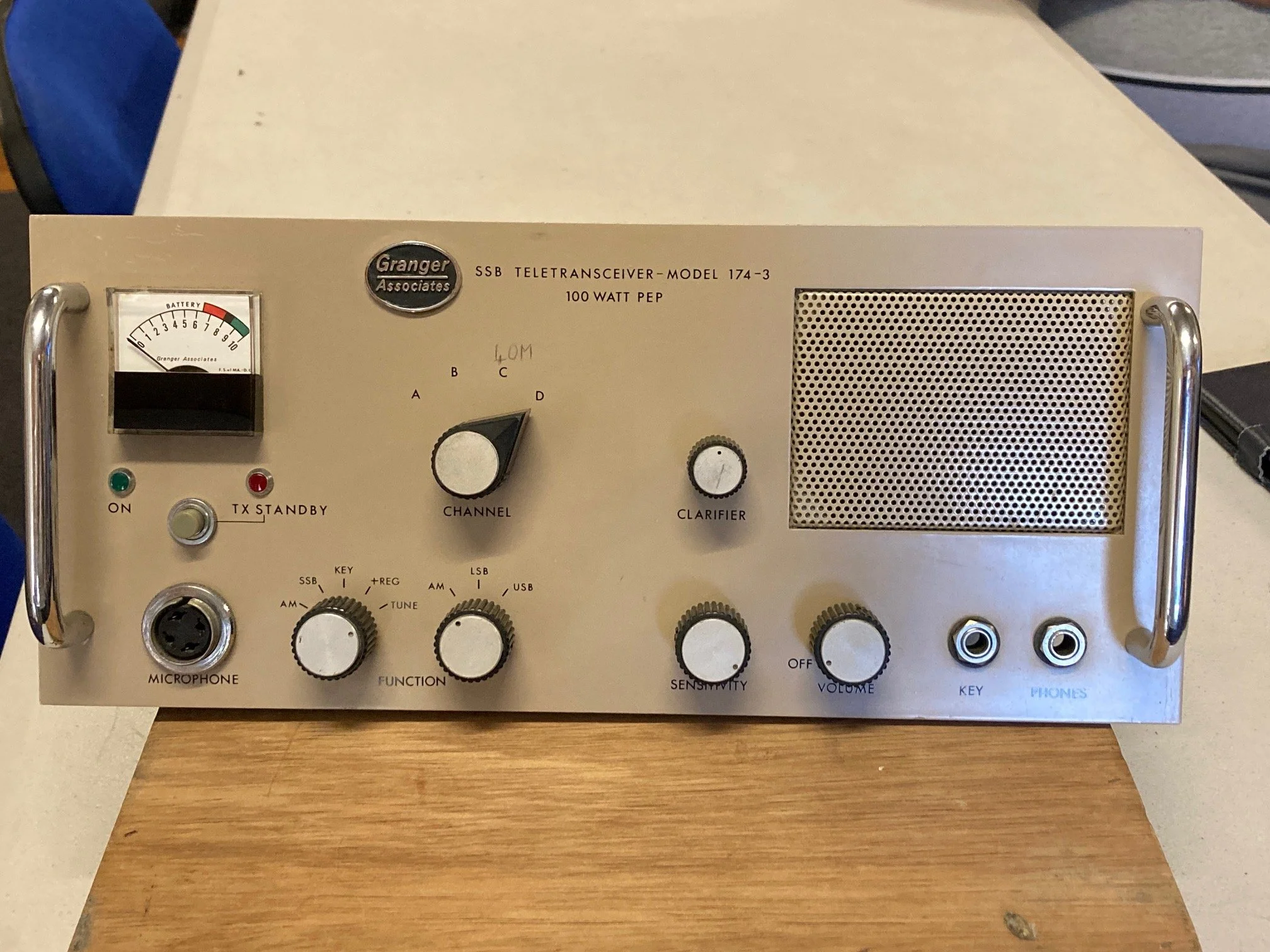
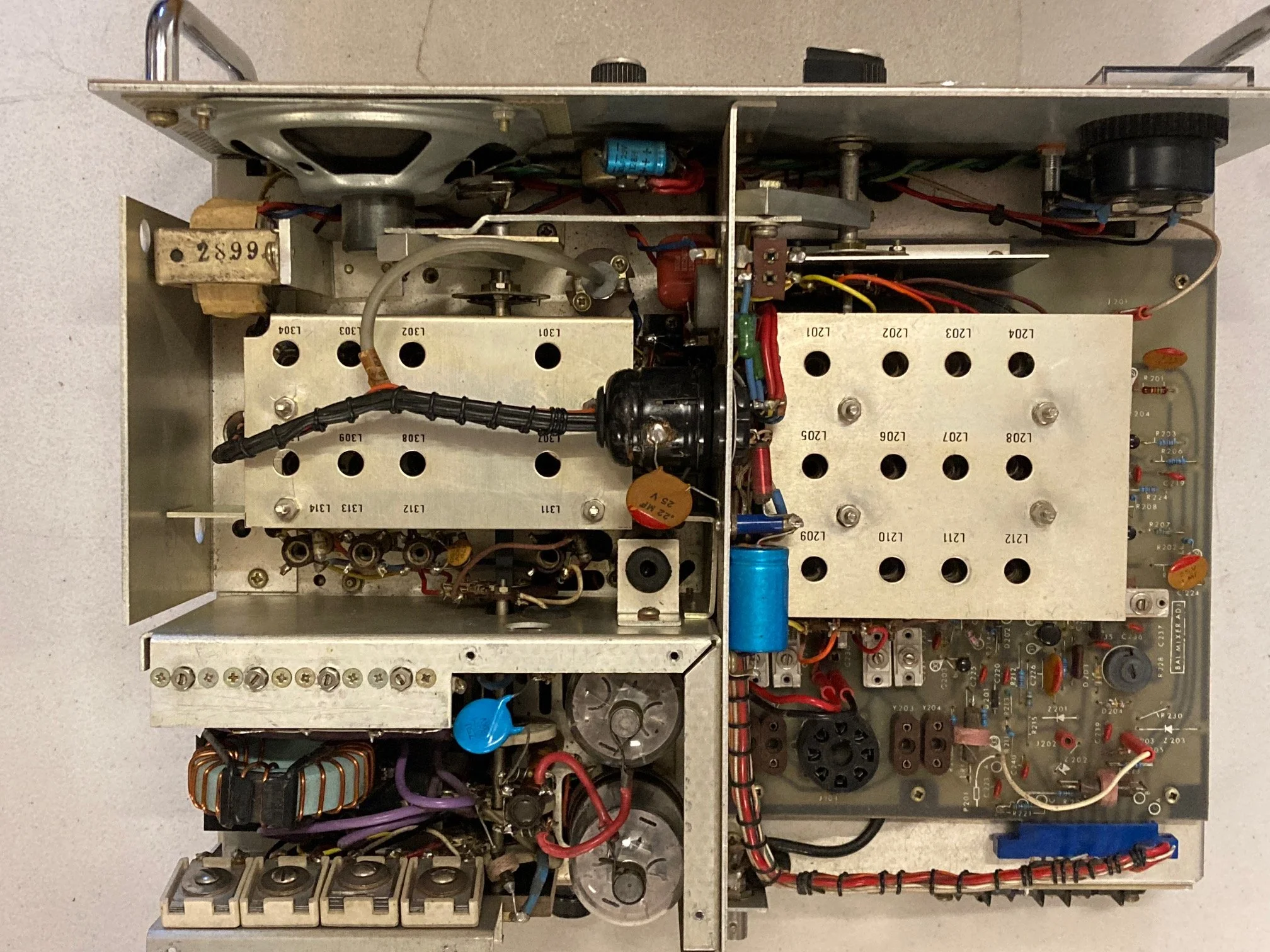
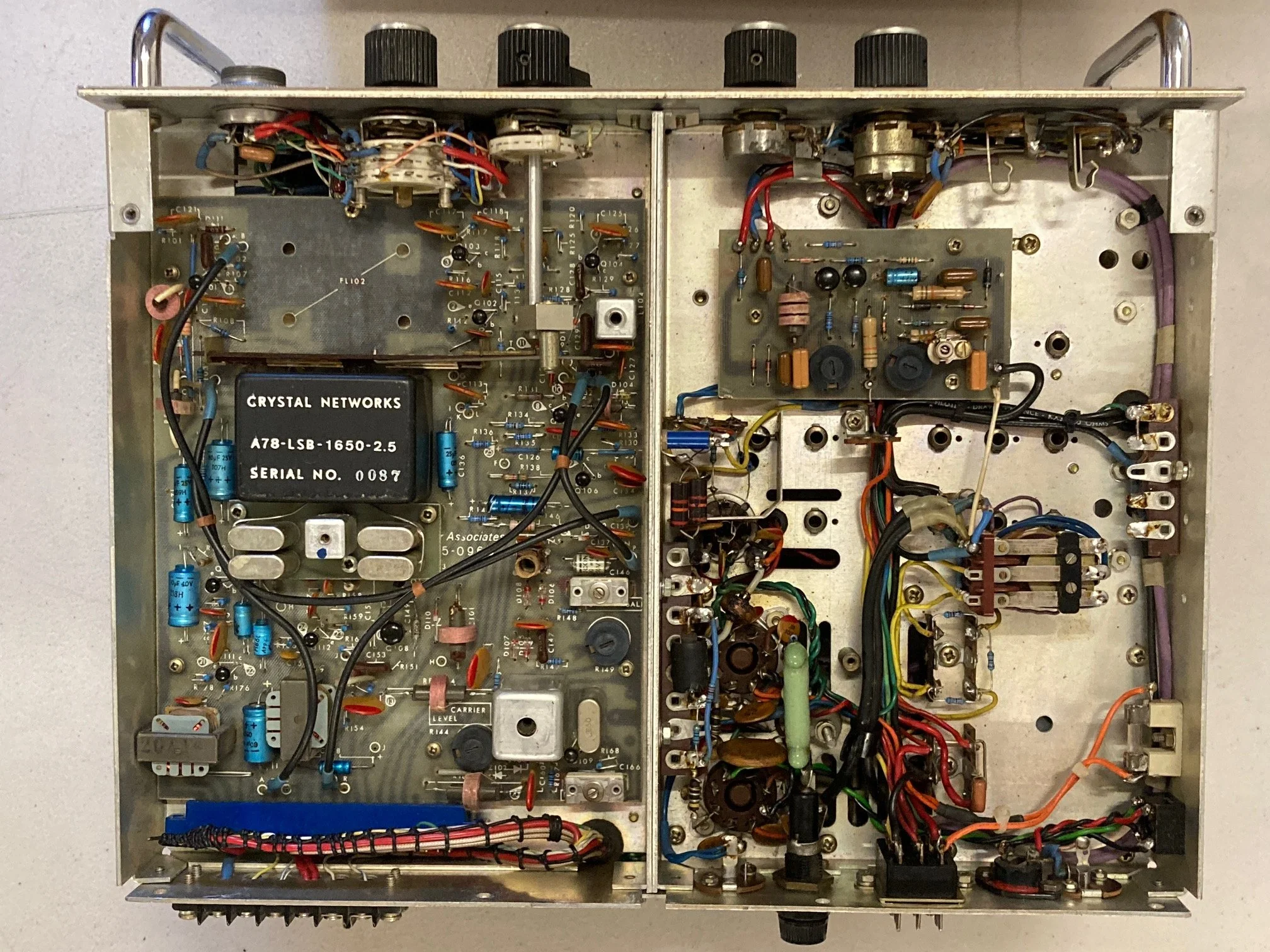
For the final club room technical night of the year Ross VK7ALH, decided to bring in a transceiver from a not so worldly known manufacturer, a Grainger Associates SSB Teletranceiver - Model 174-3, without its antenna matching unit. This rack mount unit has that purely functional communications feel about its beige coloured front panel and layout. It is a hybrid solid state unit with valve finals producing 100 Watt PEP. Four crystal controlled HF channels with AM, CW and SSB operating modes. An interesting variation with the internal mechanical links between sections. The knob on the front panel turns a cam that pushes and pulls a link rod which in turn can move wiper contacts or coil positions, an interesting solution. As mentioned the front panel is very utilitarian and only has one metre and that only displays incoming DC operating voltage, with the green good band going down to a pretty phenomenal 8 Volts DC operating voltage. Ross believes the auxiliary matching unit has the signal strength meter.
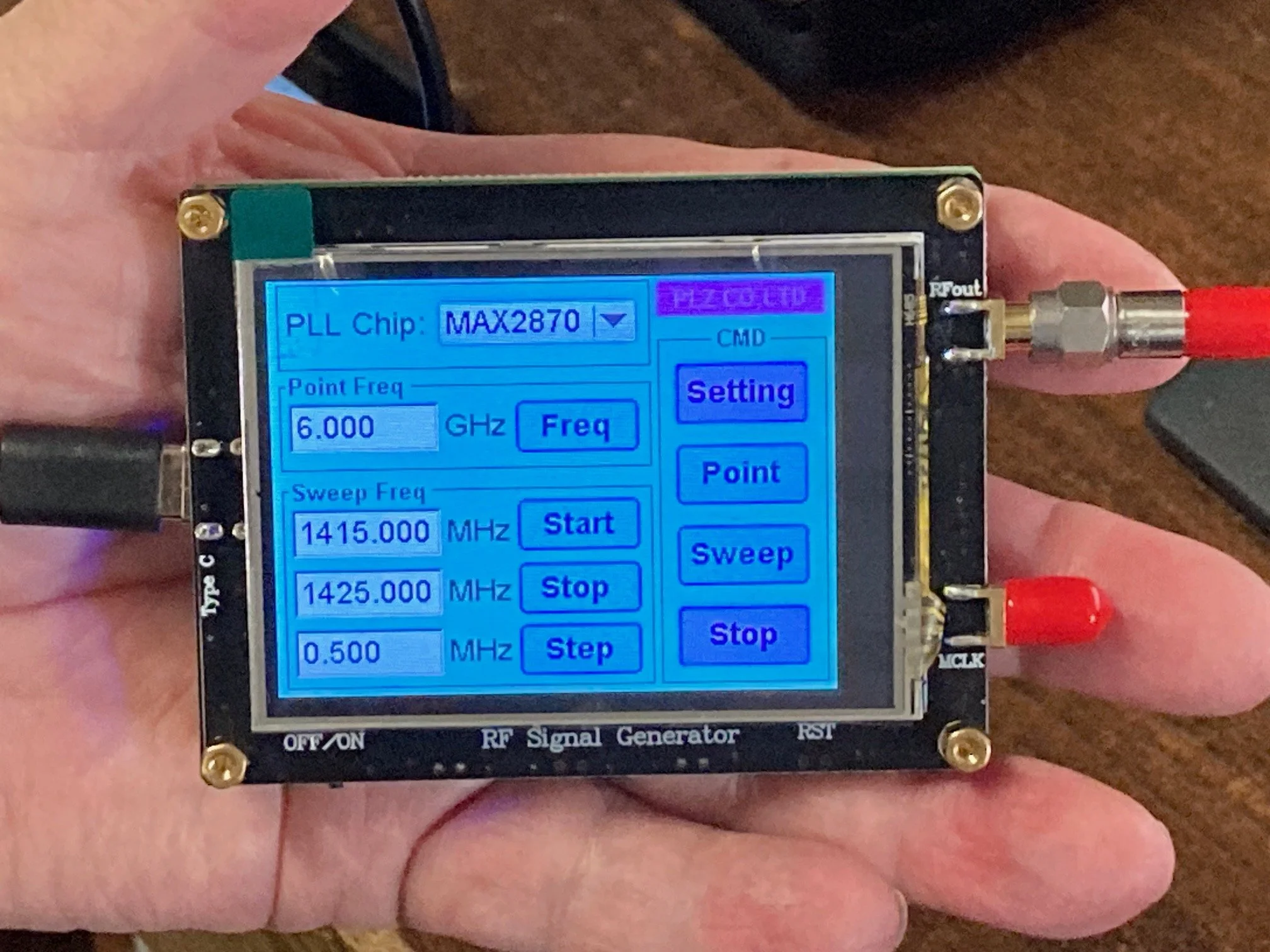
Ian VK7IG had a magnificent and small signal generator with a usable coverage from 23 MHz to 6 GHz. The heart of the unit is the MAX2870 high-performance, wide-frequency Phase Locked Loop integrated circuit. Being cost effective and Chinese it used the modern construction method of stacked printed circuit boards with no case. It had excellent screen resolution, viewing angle and clarity combined with a very intuitive menu system.
Stuart VK7FEAT, had recently been working his way through his assortment of stainless steel mobile antennas. All the ones that you stack away and say you will get back to later, to sweep, identify and label. He recovered quite a few suitable for the 2 metre and 70 cm amateur bands in good condition and Stuart had even labelled them, sounds pretty organised to me.
Colin VK7ZCF, had once again been busy 3D printing, he had:
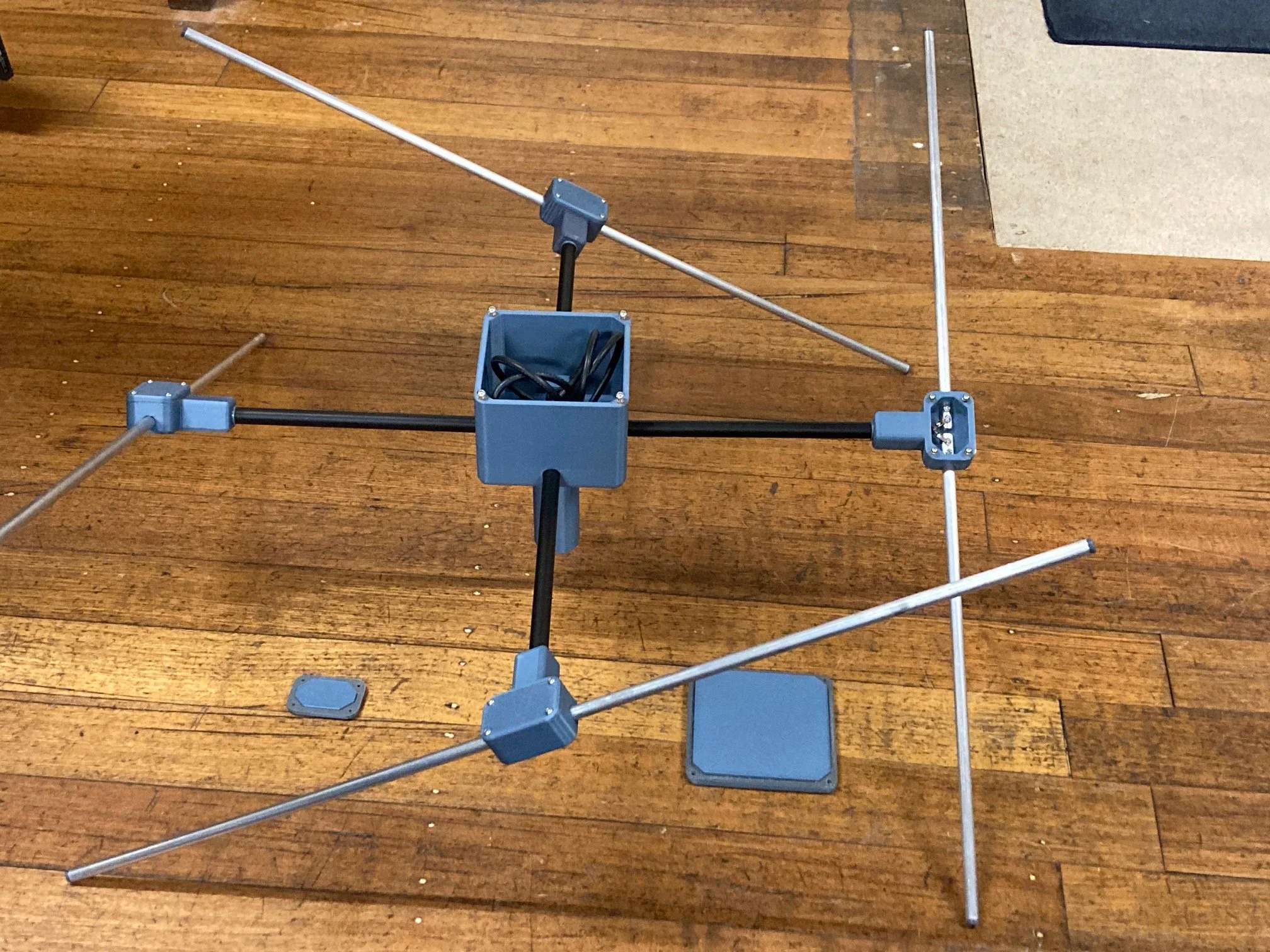
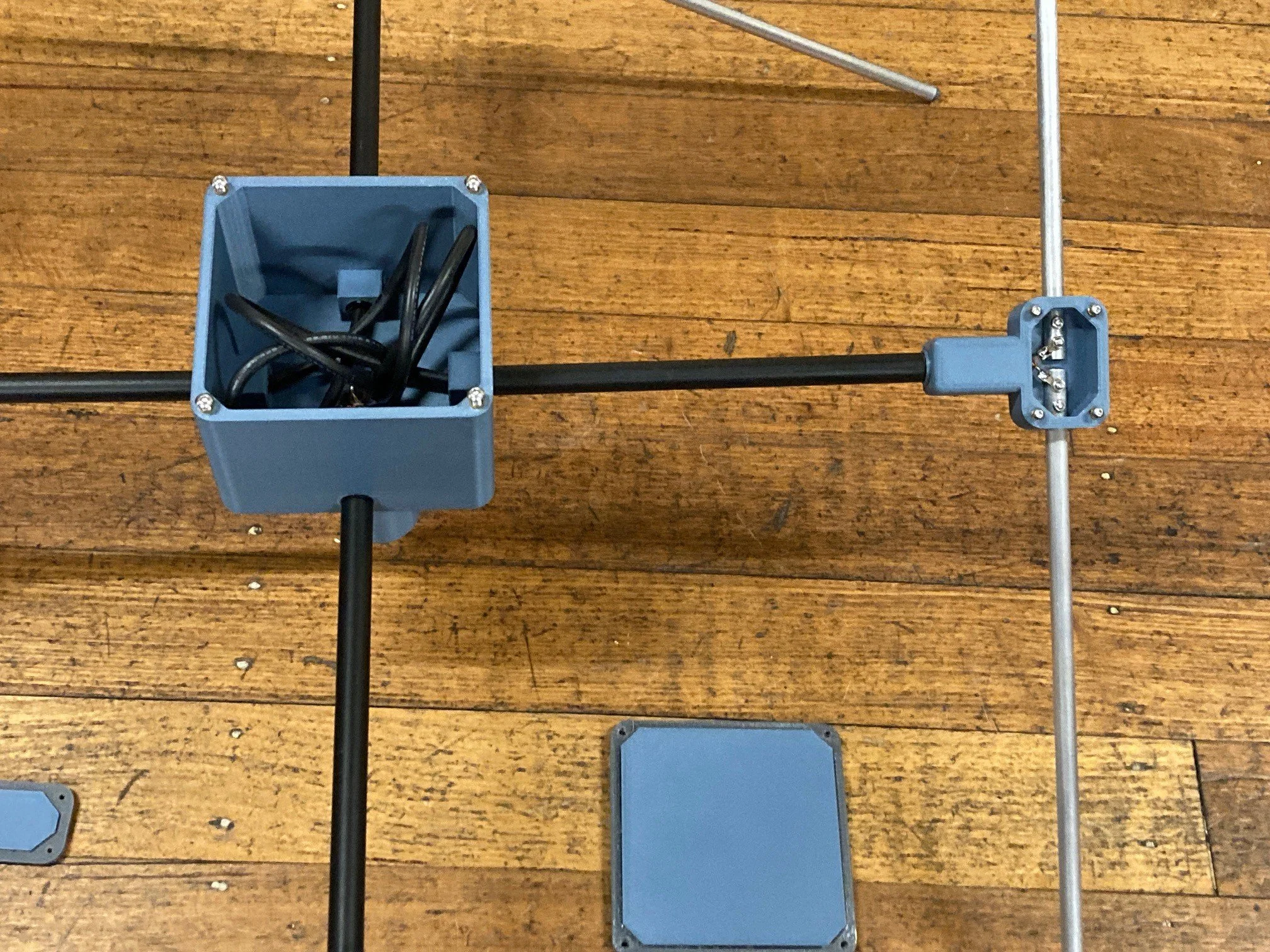
The newly design modified enclosures for his Lindenblad antenna.
The fully assembled and latest version of his Lindenblad antenna.
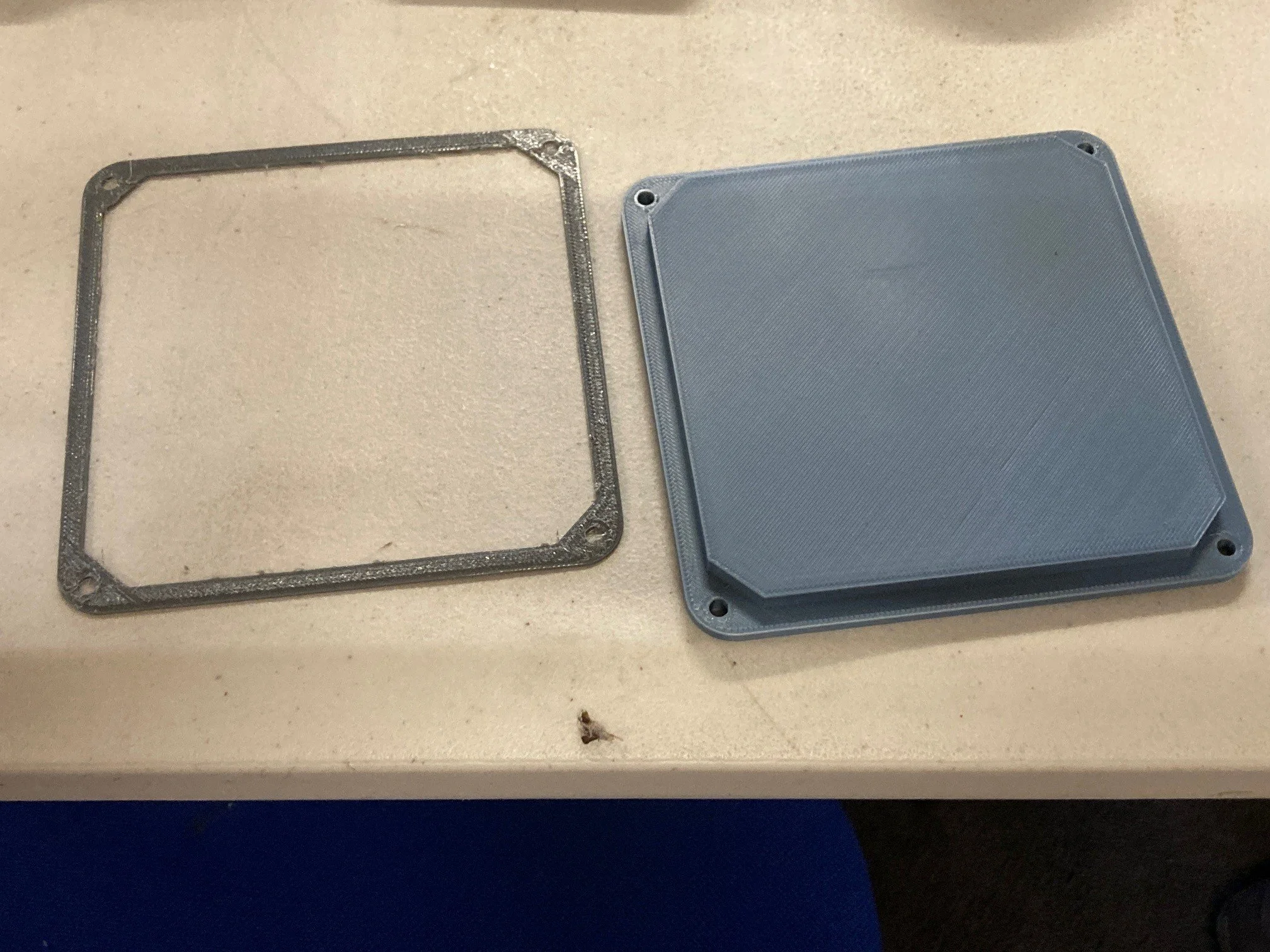
3D printed gaskets using a TPU or thermoplastic polyurethane filament, the finished product has the feel of soft vinyl. These will provide water proofing on his Lindenblad enclosures.
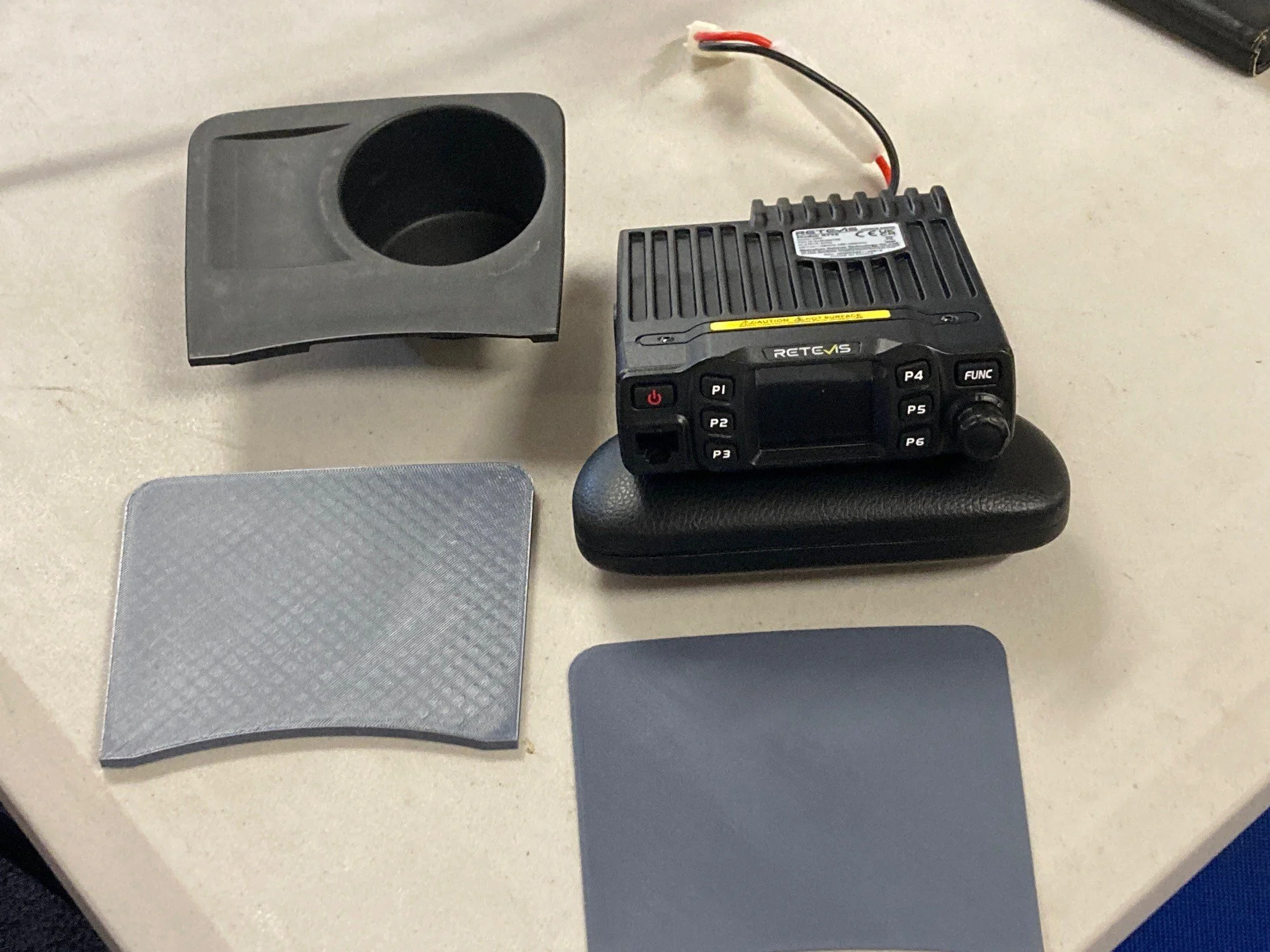
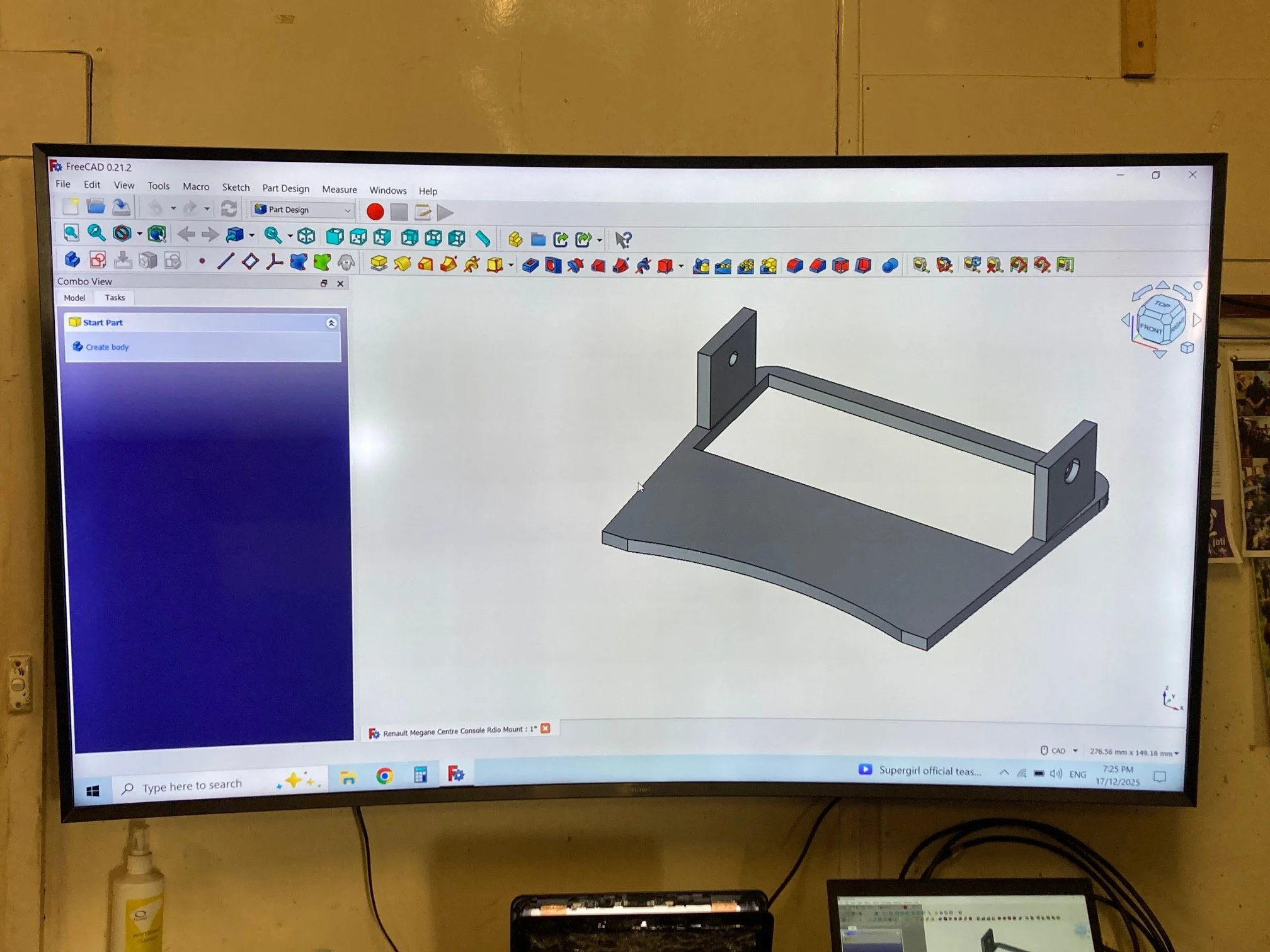
A replacement panel for his car cup holder that will provide a platform and mounting bracket for a small footprint multiband radio to be installed into.
Later in the evening Colin, true to word, was seen conducting a CAD session with Stuart VK7ES regarding some modifications to an earlier design by Stuart.
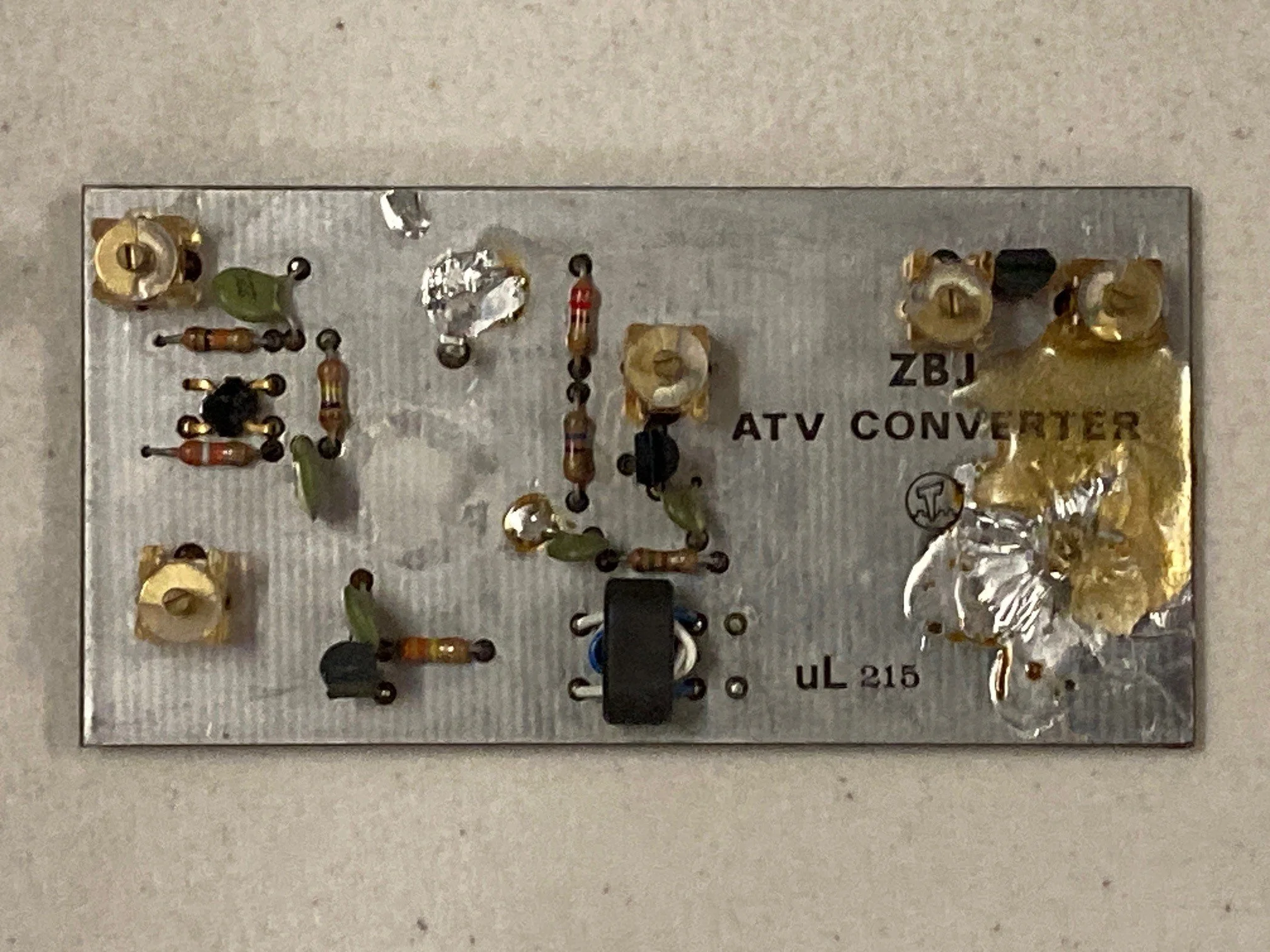
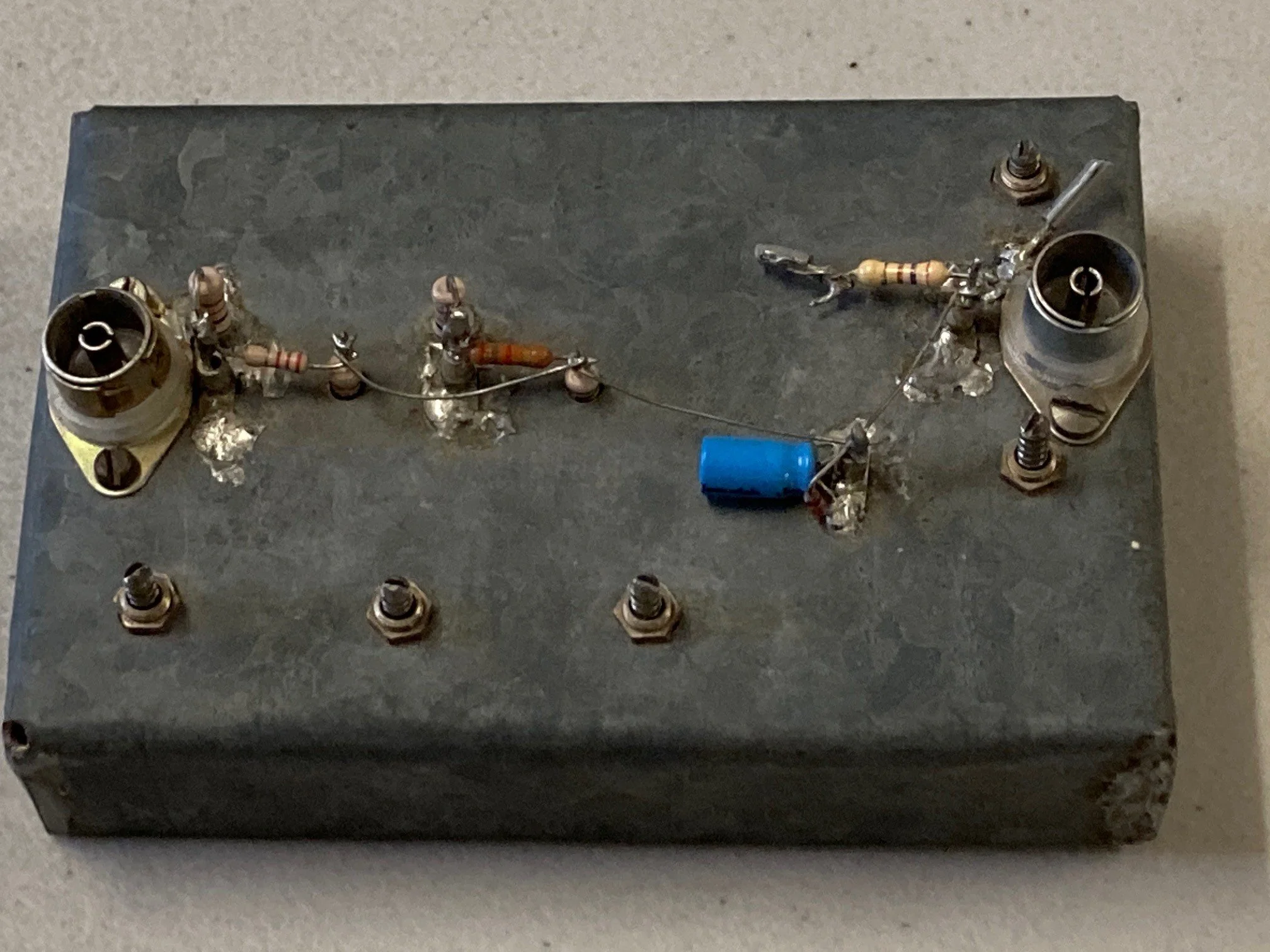
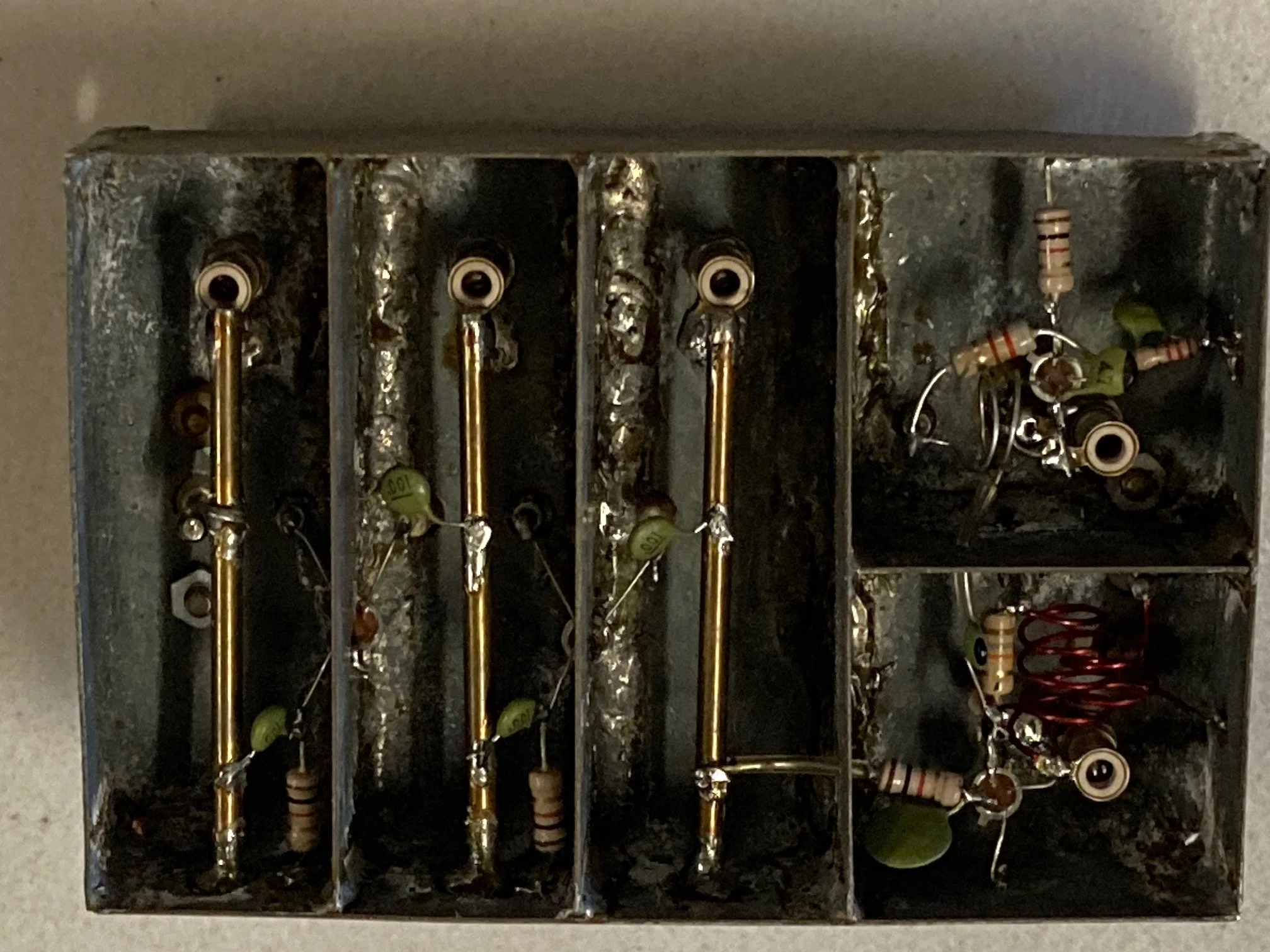
Lionel VK7ZLB had one of his earlier constructions which was the same kit design that Colin VK7ZCF brought in earlier this year. An RF receiving converter for the 432 MHz Amateur Television (ATV) transmission band, with an output that was ideal for use with a normal, at the time, analogue TV with 4-by-3 aspect ratio receiver. The design by Ian McKenzie, VK2ZIM, in a 1971 monthly news-letter published by the VHF and TV Group, WIA NSW division. This design and kit was very popular as there was no cheap ATV equipment on the market at the time, if you needed something then you built it. It wouldn’t have been an easy build as this version was constructed using a galvanised chassis, but had weathered remarkably well.
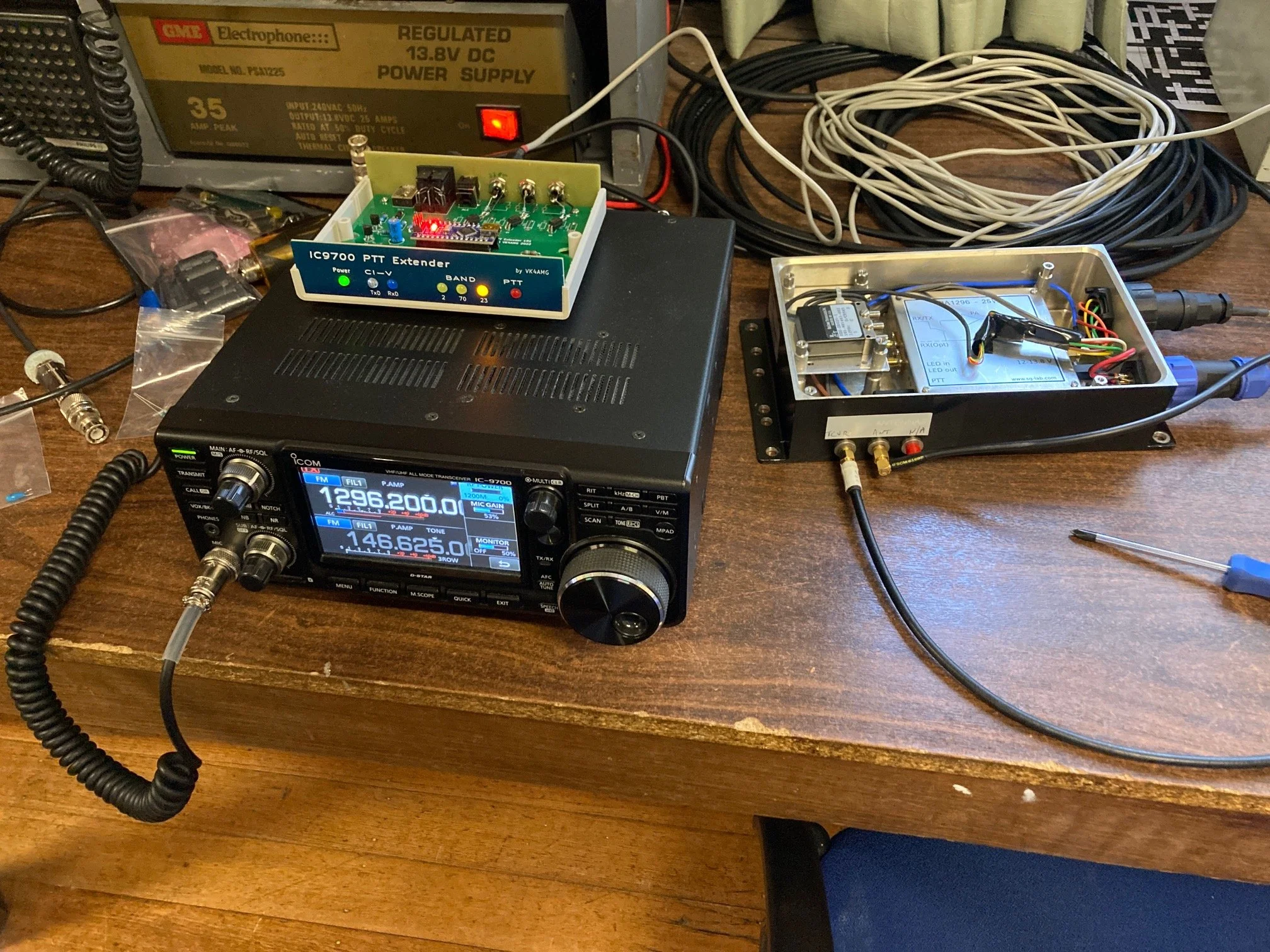
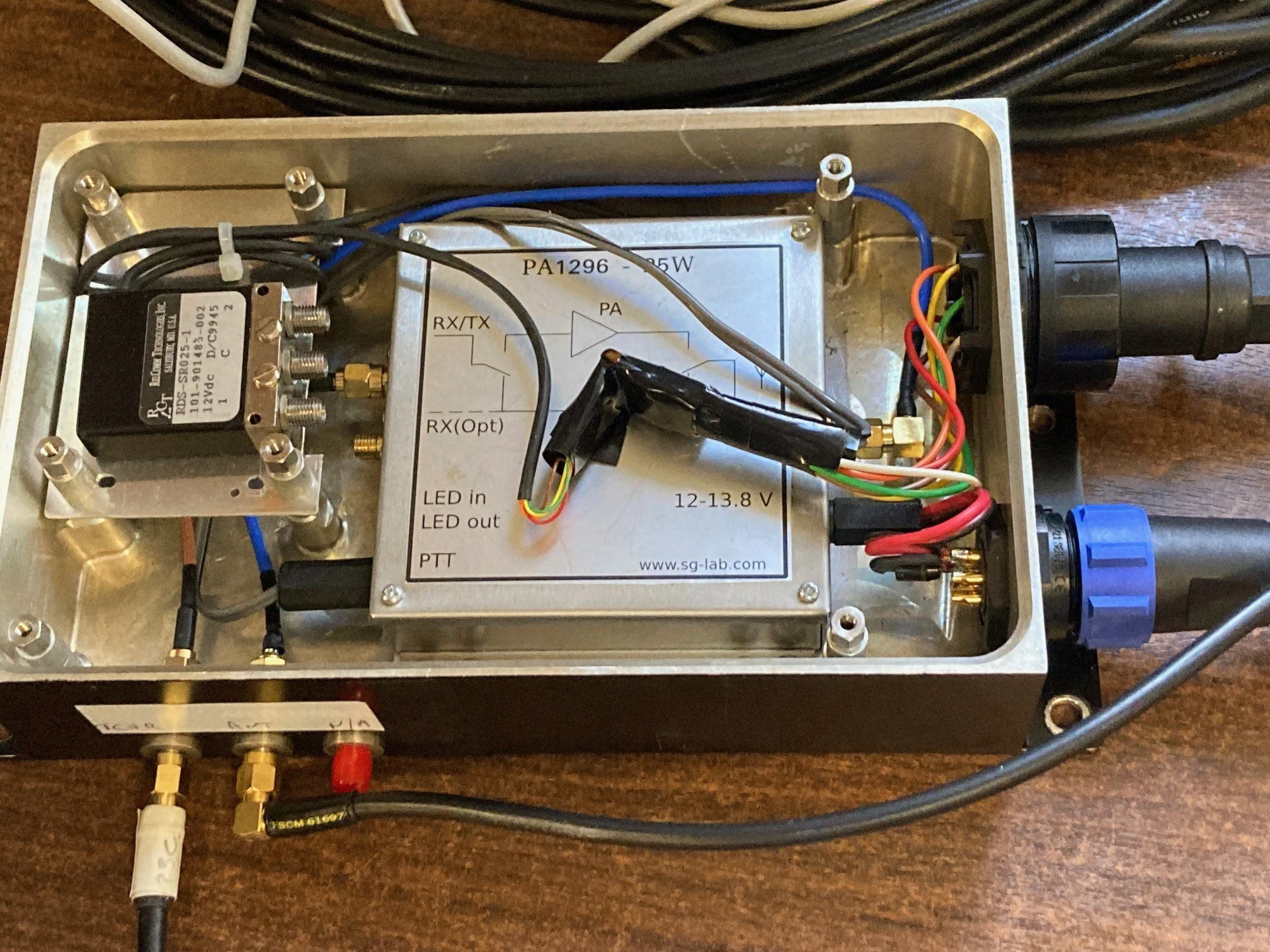
Lionel demonstrated a typical 1296 MHz test set up using his ICOM 9700 rig combined with a CI-V band decoder from the Brisbane Amateur Radio Club. The ICOM output had 15 metres of co-axial cable attached which provides the required attenuation to feed into his SG Laboratories 25 Watt Power Amplifier module and preamplifier, from Bulgaria. The Power Amp and preamplifier were mounted in a very nice mil spec CNC routed waterproof enclosure, complete with some rather nice waterproof multi pin control cable connectors. This then fed into a TeleWave Power Meter and finally a dummy load.
Lionel also had a very small clip lock bag about the size of a box of matches, with a note and arrow inside it allegedly pointing to a Surface Mount Device or SMD Capacitor. There was a miniscule metallic “glint” from one corner of the bag and yes it supposedly was an SMD. Evidently it was a 0201 SMD capacitor. To put thing in perspective it measured 0.6 by 0.3 mm, that’s about the size of one fine ground table sugar grain! Definitely a microscope needed for placement at our level of construction! Just think of the level of accuracy in the “pick and place” machines being used on assembly lines.
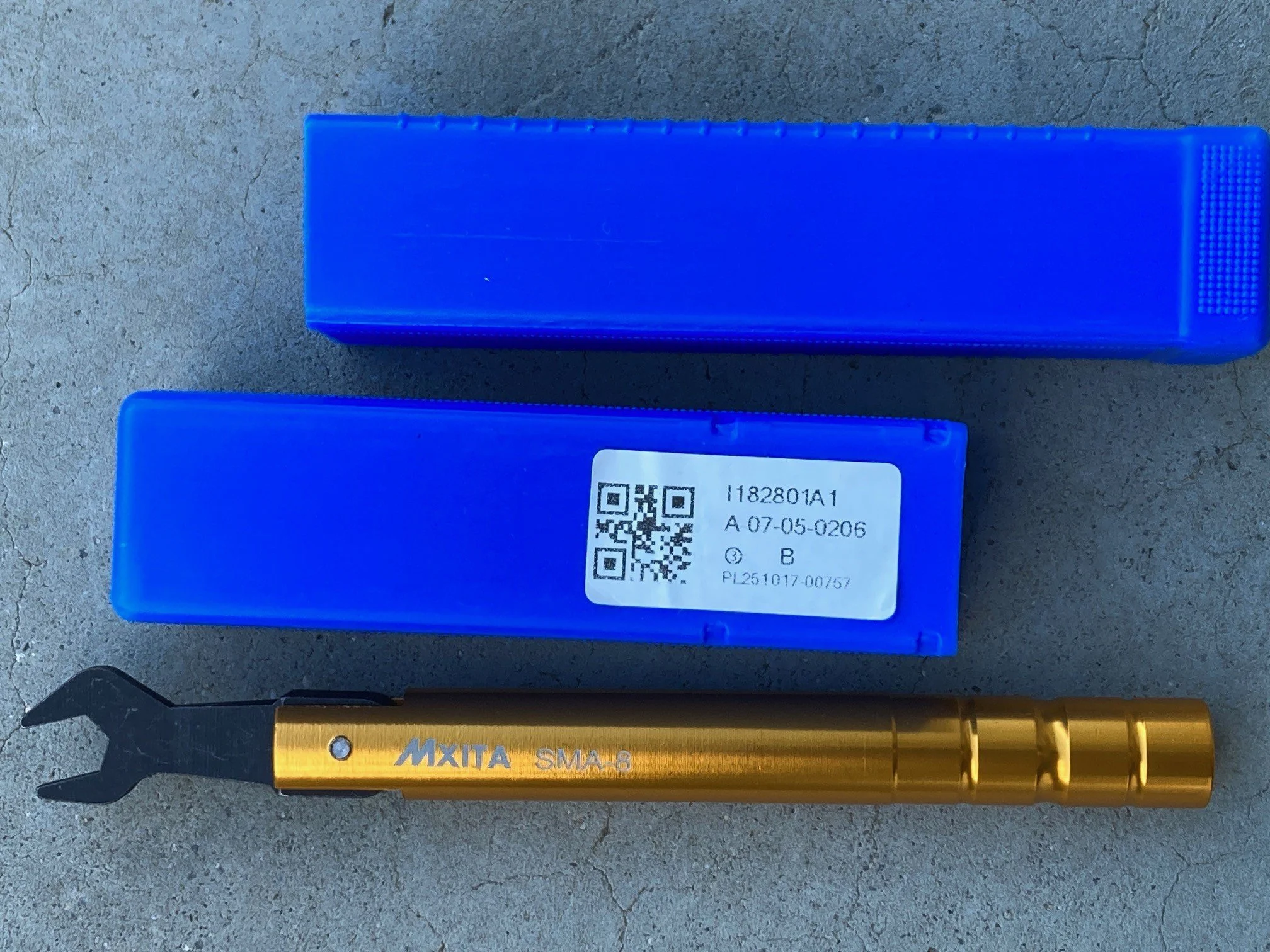
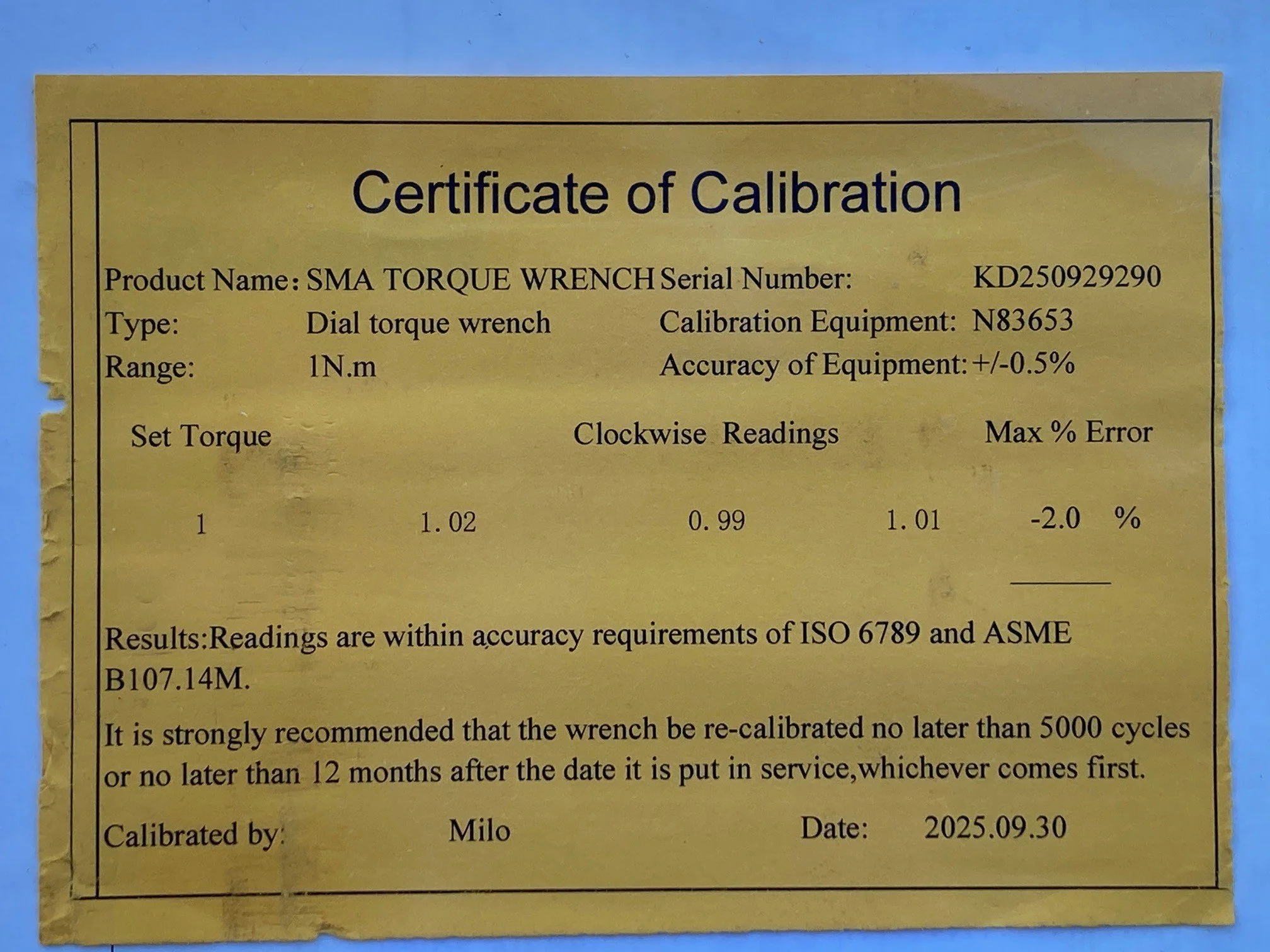
Idris VK7ZIR had a miniature torque wrench, about 100 mm long. It is specifically designed for applying the correct tension on SMA connectors! This little tool even came with a calibration certificate. Now I am sure we all apply the “correct torque’ when attaching SMA plugs purely to guarantee manufacturer design specifications! Hi-Hi
The technical night was jam packed with technical goodies but members still managed to find time to eat heartily and drink the non-alcoholic beverage of their choice. I am sure some of the items were probably not meant to be opened or admitted to until Christmas morning, but that’s another story.
As mentioned last week an E-mail will be sent out in the next few days to all members regarding membership renewal options. By all means feel free to renew your membership. But importantly if you haven’t received the e-mail and you have checked your Junk folder, then drop an e-mail to the secretary with your preferred e-mail address and I will update any address discrepancies.
As always pictures will be available on the NTARC Web site under “Blogs” for this broadcast. NTARC Blogs
This week has seen the complete winding down of club activities in time for the Christmas Break. Also as this weekly news is the last till that man in red arrives in just four more sleeps, or if it’s Tuesday night re-broadcast, then it is two more sleeps, this is our final opportunity, to wish everyone a Merry and Safe Christmas. For those of us travelling over this period please take care. Enjoy your Christmas feast with family and friends, see you all next year.
That’s all folks,
73, Stefan VK7ZSB, on behalf of the NTARC Committee.