Broadcast - 22 February 2026
Do your lips tingle when they touch your microphone when you key up? Does the Ethernet or USB connection to your radio drop out when you start transmitting?
Does this sound a bit fishy?...... well it’s the advertising hook from a small business called Halibut Electronics and where Colin VK7ZCF obtained a couple of items that he brought in to last Club Room Technical Night.
Halibut Electronics is a small one person business based on the Central Coast of California, run by Mark Smith - better known to many hams as Smitty, N6MTS, and among other things he puts together kits and pre-assembled items for amateurs.
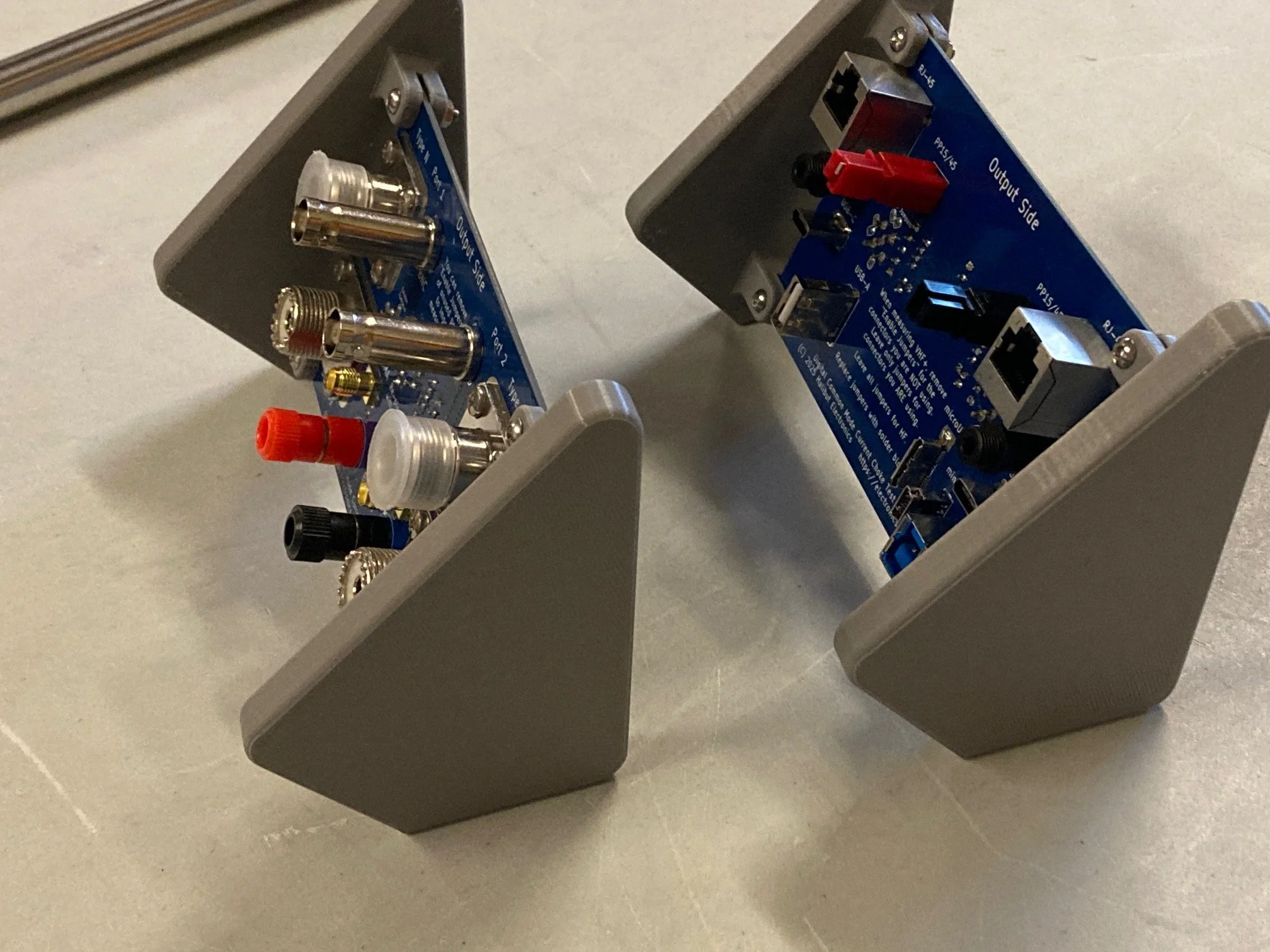
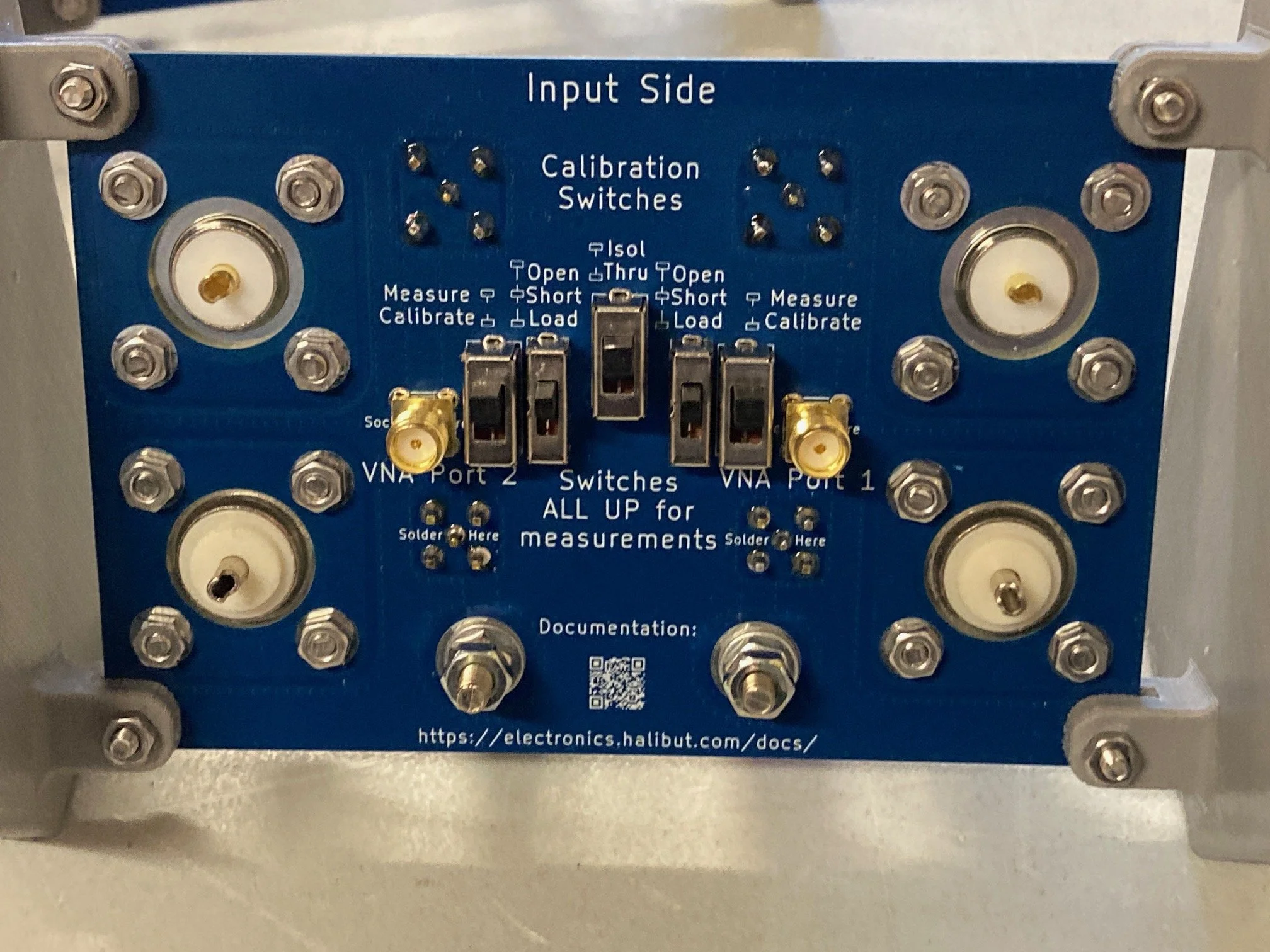
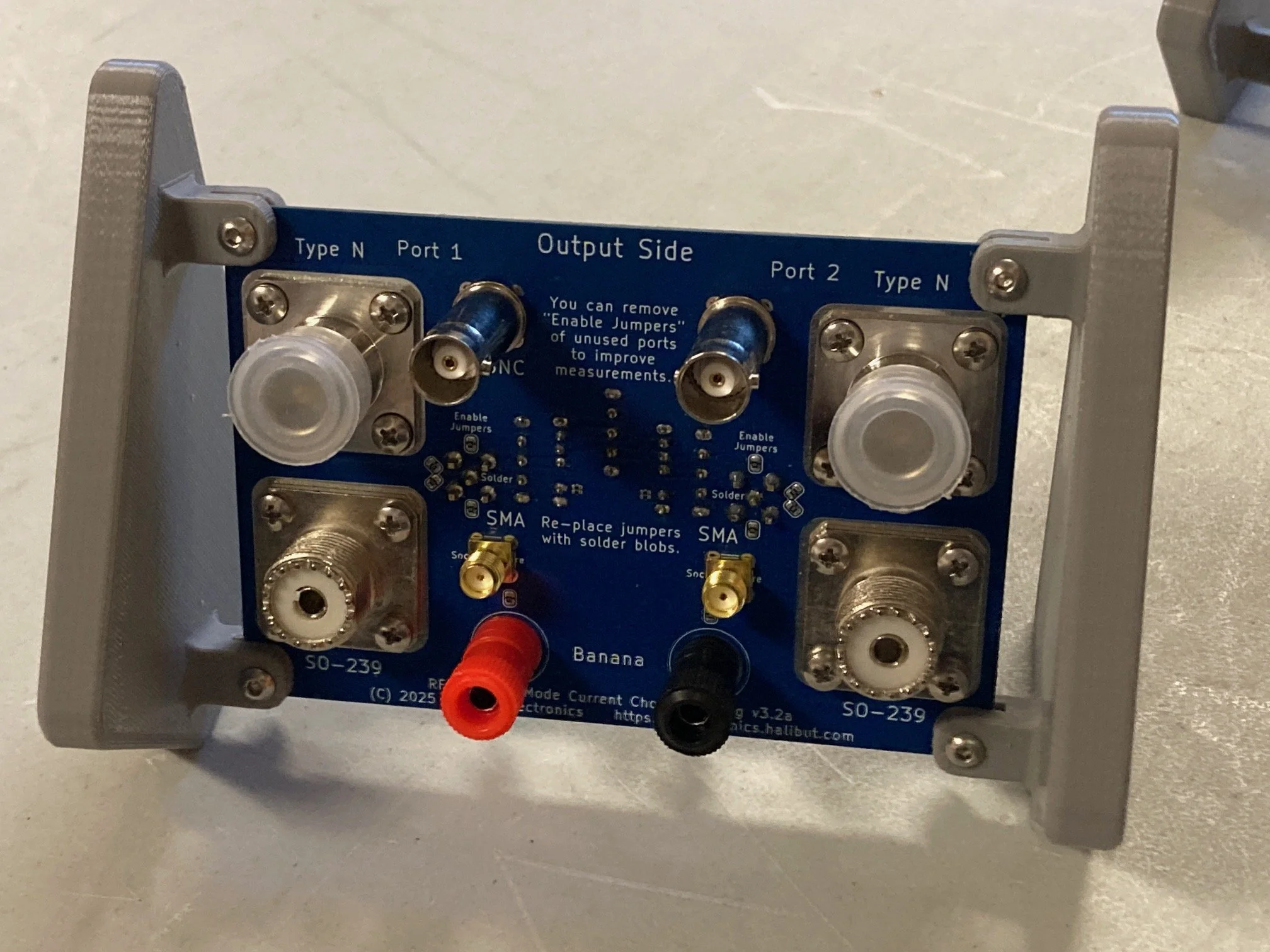
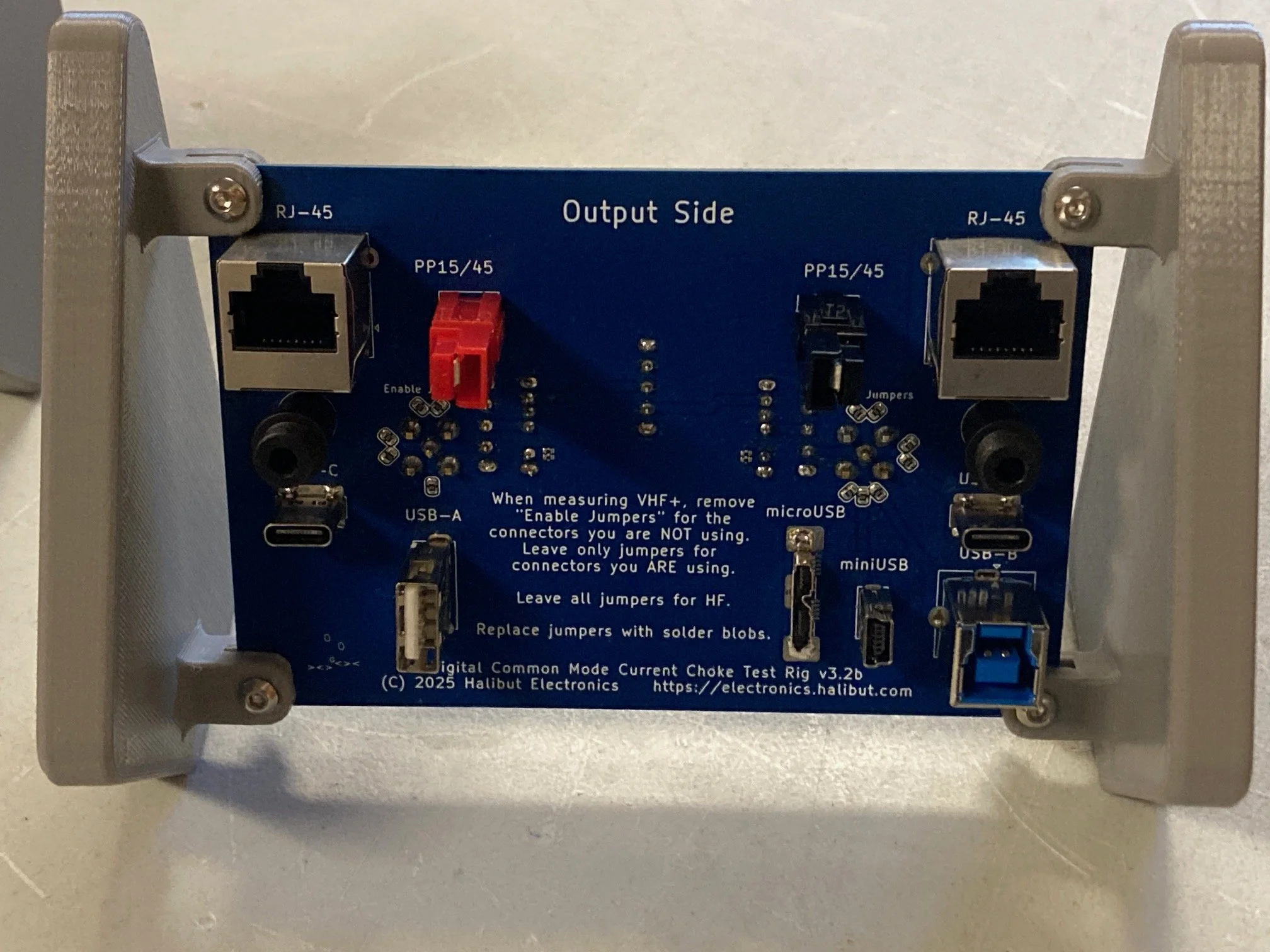
Colin went for the kit versions of Mark’s Common Mode Current Choke, or CMCC testing Rigs.
The RF CMCC test rig interface is equipped with BNC, SMA, SO-239 and Type-N connectors and the Digital CMCC test rig version has non RF type connectors like Ethernet, USB, 3.5mm Audio, and Anderson Powerpole connectors.
The kits included the printed circuit board and all components to make them functional. Both kits had been fully assembled by the time we saw them at the club rooms. Colin decided against a standard type of enclosure and opted for designing and 3D printing a pair of “book end” type plates to hold the board upright but leaning back about fifteen degrees from the vertical regardless of which side of the board you are looking at. Not only does this allow for good visibility but has an added bonus of being quickly flipped around, which allows quick access to the five slider switches for calibration and test mode selection, plus the two SMA connectors for attachment to a VNA.
In Mark Smith’s own description of his Common Mode Current Choke test rig he says that it “allows a (Nano)VNA to measure the common mode response of a device. Usually, a VNA generates differential mode signals and intentionally rejects common mode signals from its measurements. This makes it difficult to measure things like the effectiveness of a common mode current choke. CMCC is a test rig that routes the signal that a VNA is measuring to the outside shield of coaxial cable to measure its common mode response.”
To simplify Mark’s concept, it allows you to perform Test and Measurement so you can quantify the attenuation and resistance of a choke, instead of just blindly trusting the wisdom of the internet and crossing your fingers. Hi-Hi.
A link is included in the text version for Mark’s “simplified” presentation in YouTube on CMCC. Measuring Common Mode Chokes
The only other notable happening in the previous couple of weeks was the NTARC Annual General Meeting held on the 11th of February. The AGM saw a good attendance of voting members. Extensive reports were presented by the President and Treasurer, followed by each of the club activity leaders and the all-important Auditor’s statement. All were tabled and each was well received by the membership.
The elections saw the return of Idris VK7ZIR as President, Ian VK7IH as Vice President, André VK7ZAB as Treasurer, Stefan VK7ZSB as Secretary and Roslyn as committee member.
Roger VK7ARN our Internal Auditor and Stefan our Public Officer were both incumbent and are continuing in their respective positions.
All the club activity co-ordinators were again appointed to their respective positions; Tony VK7YBG as Repeater Officer, David VK7JD continuing his role as Project Manager for Mt Arthur, with both being assisted by Paul VK7KPA and Andrew VK7DW as Assistant Repeater Officers.
Other club activity coordinators agreeing to continue in their roles for 2026 were Peter VK7PD as the Education Officer, Ian VK7IH as our new JOTA/JOTI Coordinator, Andrew VK7DW QSL manager and Roger VK7ARN as our Safety Communications Coordinator.
So there you are folks, you now have the NTARC Committee and Coordinators for 2026.
As always pictures will be available on the NTARC Web site under “Blogs” for this broadcast. NTARC Blogs
UPCOMING EVENTS
On Air Test and Technical Net session - Every Wednesday night, Test-Net and CW course on 3.580 MHz from 7 pm, then a Technical Net on 3.567 MHz from 7.30 pm till 8.30 pm. Your host for the evening is Nic, VK7WW.
Club Room Technical night - The next session will be Wednesday the 4th March and will commence at the usual time of 6.30 pm at the Club Room Archer Street, Rocherlea.
Coffee Morning - Held every Friday in the NTARC Club rooms. Time is from 10 am to noon.
Finally - If you have any items of news please email them to the Secretary at the following address news@ntarc.net all items to be received no later than 5 pm on the Friday prior to the Broadcast.
That’s all folks,
73, Stefan VK7ZSB