Broadcast - 1 March 2026
We have a couple of items left over from last week’s club technical night, both were from Colin VK7ZCF.
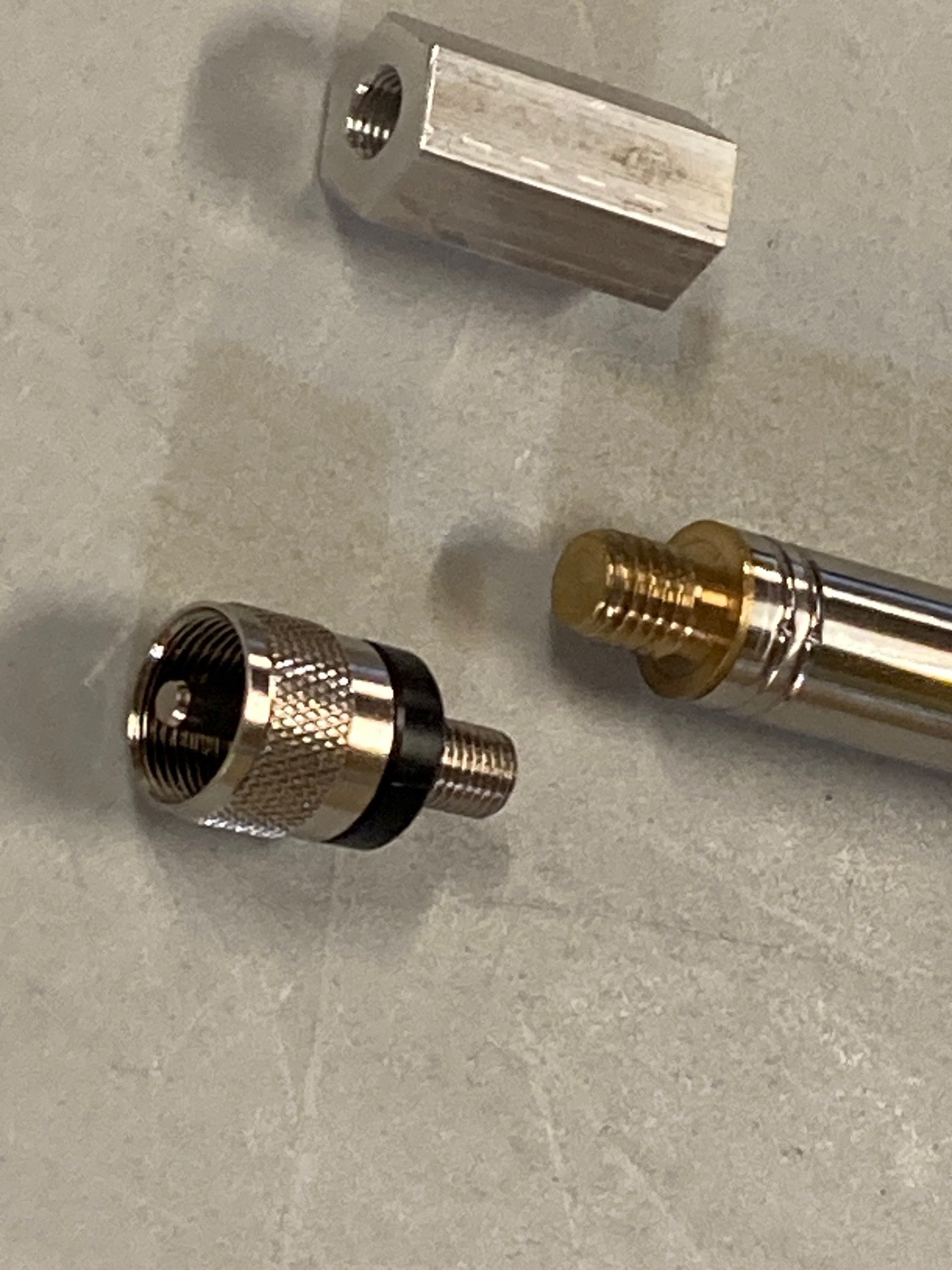
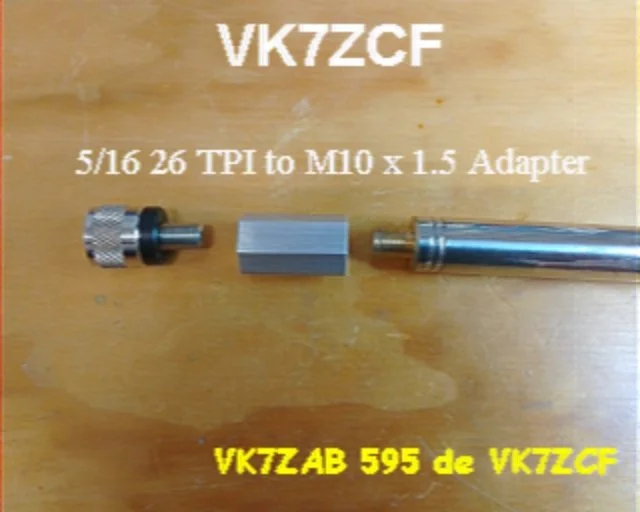
Firstly: a demonstration of his prowess on the lathe. Colin recently picked up a solidly constructed telescopic antenna online, only to discover a small problem when it arrived: the antenna and the mounting base were both male fittings, each with different diameters and thread pitches. Most of us would have jumped straight back onto the internet in search of an adaptor, but not Colin. With a lathe in the shed and the skills to match, he simply turned up a piece of aluminium, bored it out, tapped the threads, and produced a perfect custom adaptor. Problem solved…. one neat, home‑made solution that allowed him to get back to his radio experimentation.
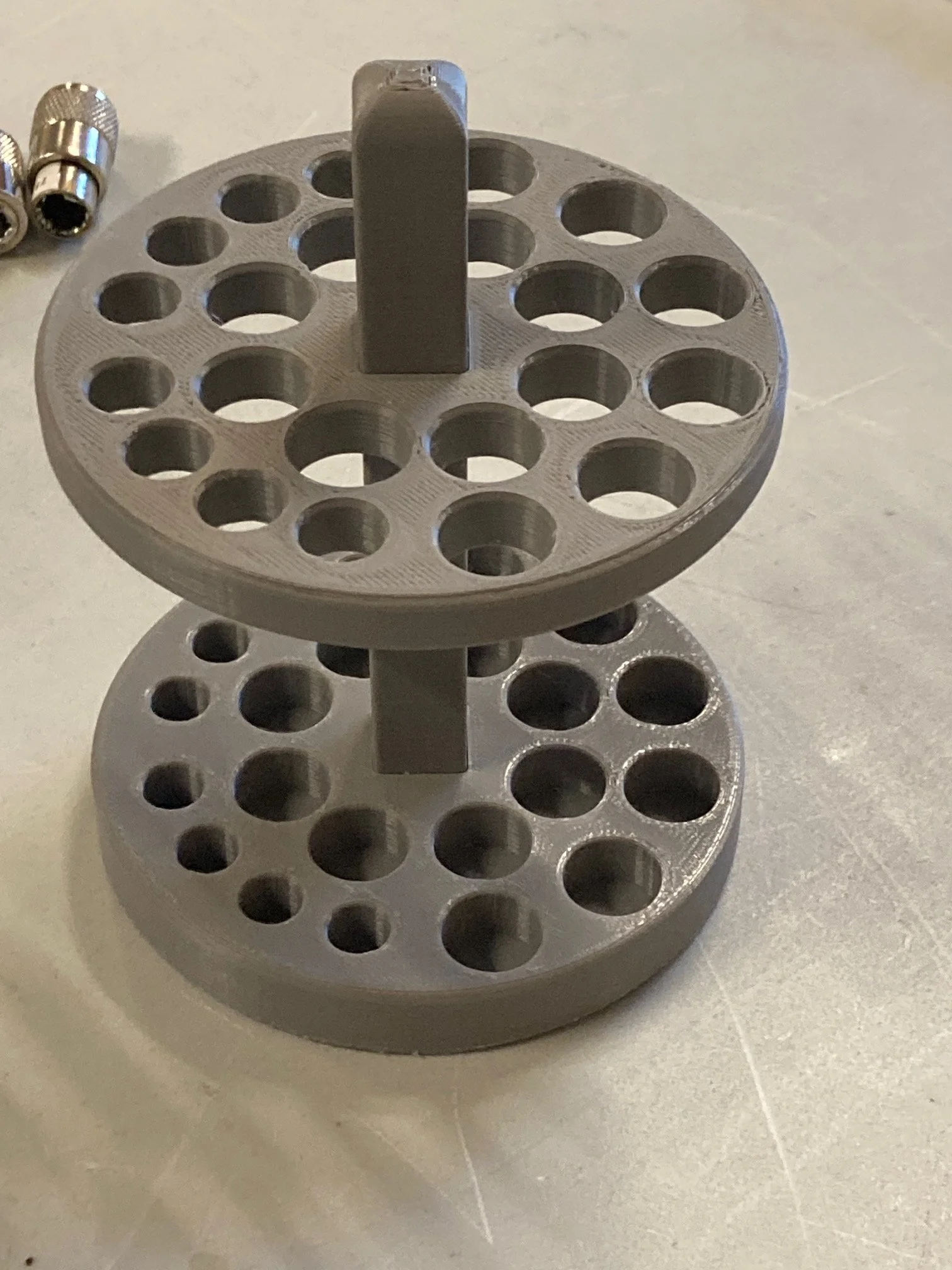
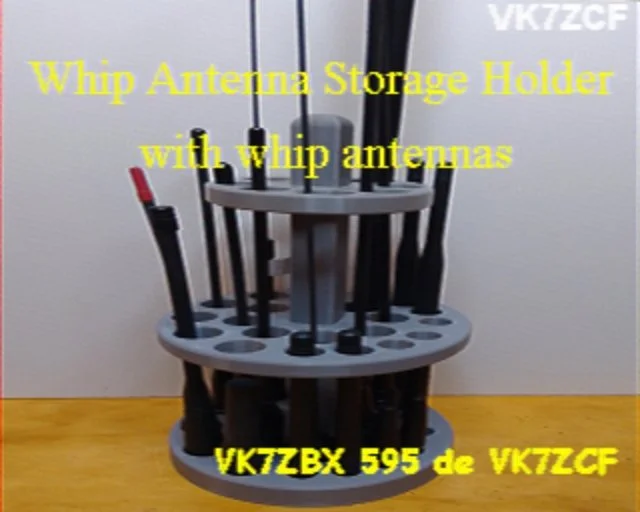
Secondly: almost the opposite, from removing aluminium on a lathe when making an object…… to adding plastic filament with a 3D printer to create an object. For this 3D printed object, can you imagine an old style umbrella stand? The type with the central pole, a disk at the top with large openings to put your umbrella vertically through and a base disk to hold the tips off the floor. Well, Colin printed one…. Only it is very much smaller, about 250 mm tall with lots of circular holes in the top disc. Not for miniature umbrellas, but a prototype stand in which to place all his spare or unused whip antennas for his handheld radios. It keeps them all in one handy spot and easy to carry when moving them about. This was a proof of concept and already has undergone some design modifications. The Mark II version was already being 3D‑printed during club night, so the prototype, which was no longer needed, was quickly reassigned. Its new job? A possible perfect dart holder - ideal for those pointy things with feathers that you throw at a dart board. A very creative repurpose that I would not have thought of, hopefully Brendan VK7VIP will let us know how it functioned in its new role.
The next club room technical night will be a follow on from the previous night where Colin brought in a couple of assembled kits for the test and measurement of Common Mode Current Choke effectiveness.
These kits were purchased from Halibut Electronics in California. We will commence the evening with a video presentation on the reason behind the Common Mode Current Choke or CMCC, by the kit designer and distributor of these testing jigs, Mark Smith N6MTS. He delivered this presentation at the “QSO Today Virtual Ham Expo”, California 2021. Mark will cover the basic theory behind Common and Differential Mode Currents and the usage of a test jig that allows a Vector Network Analyser or VNA, to measure the common mode frequency response of a choke. Concentrating mainly on co-axial cable feeders and the effect on attenuation versus frequency of implementing Gordian Knots, toroidal and clip on ferrite cores to the feeder cable. This will give members a refresh on background theory and a feel for the testing procedure that Colin will demonstrate with his test jig and VNA following the presentation.
As always pictures will be available on the NTARC Web site under “Blogs” for this broadcast. NTARC Blogs
UPCOMING EVENTS
On Air Test and Technical Net session - Every Wednesday night, Test-Net and CW course on 3.580 MHz from 7 pm, then a Technical Net on 3.567 MHz from 7.30 pm till 8.30 pm. Your host for the evening is Nic, VK7WW.
Club Room Technical night - The next session will be this Wednesday the 4th March and will commence at the usual time of 6.30 pm at the Club Room Archer Street, Rocherlea.
Coffee Morning - Held every Friday in the NTARC Club rooms. Time is from 10 am to noon.
Finally - If you have any items of news please email them to the Secretary at the following address news@ntarc.net all items to be received no later than 5 pm on the Friday prior to the Broadcast.
That’s all folks,
73, Stefan VK7ZSB.