Broadcast - 29 March 2026
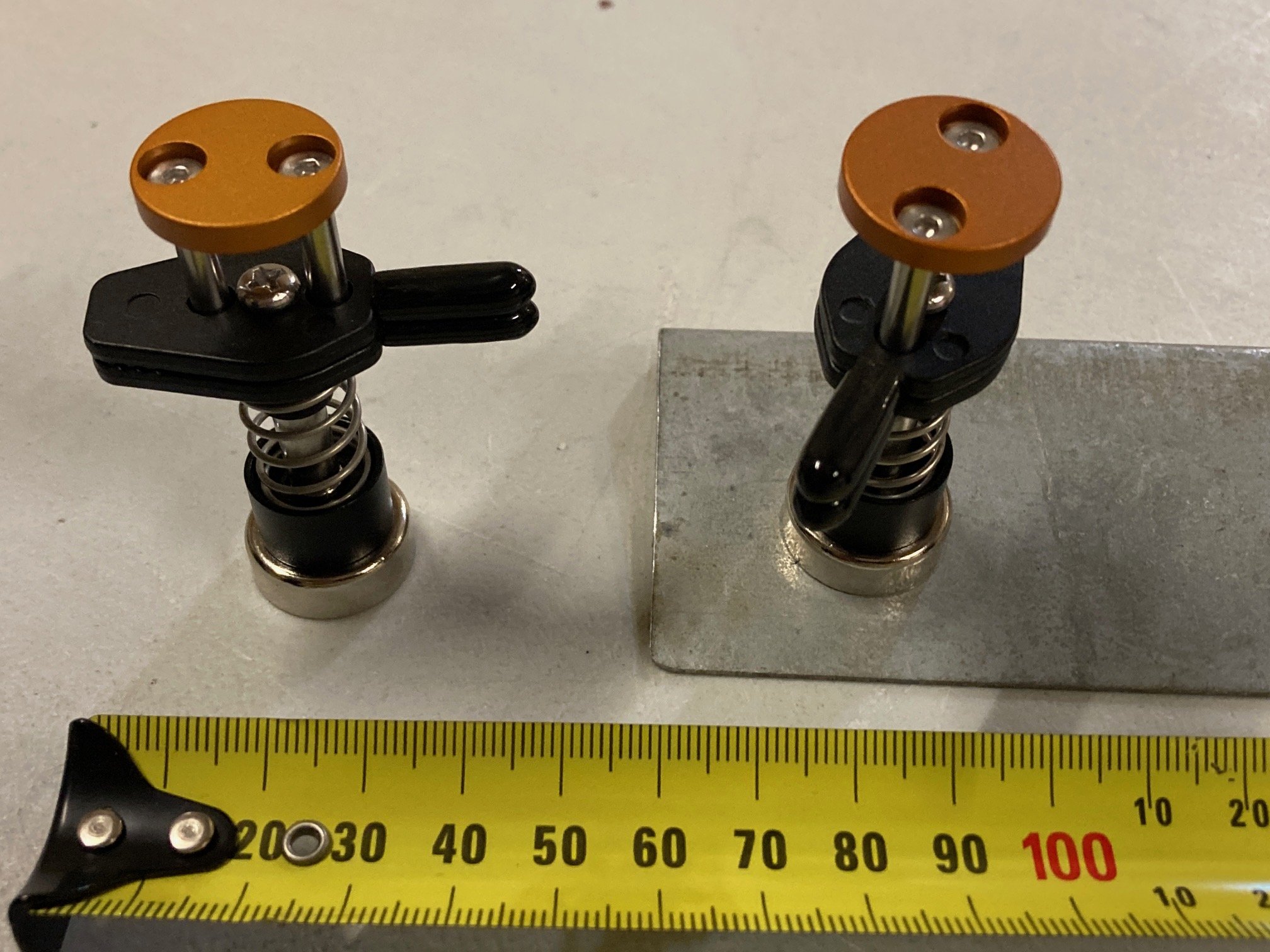
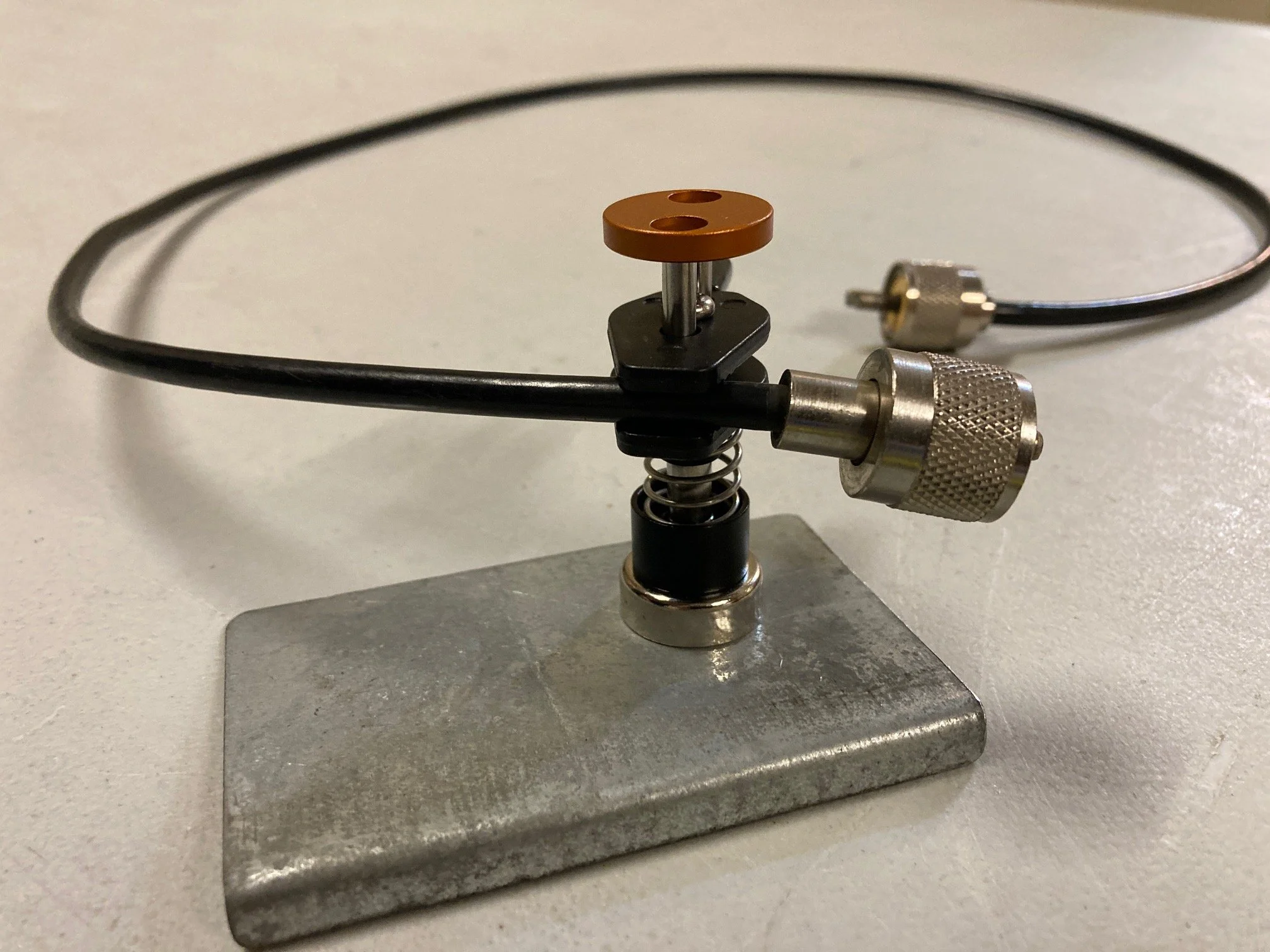
Last Technical Night Colin VK7ZCF, brought in a pair of aluminium “extra hands”, not the alligator clip jaw type, these ones are individual and have single spring clamp jaws, mounted on a 50 mm pole with a very strong magnetic base. Ideal for holding small objects or wires together while soldering or even gluing items. They are very versatile as your work area is only limited by the size of the magnetic sheet you provide for them to attach to. Surprisingly well engineered considering the price and online shop of origin. HiHi
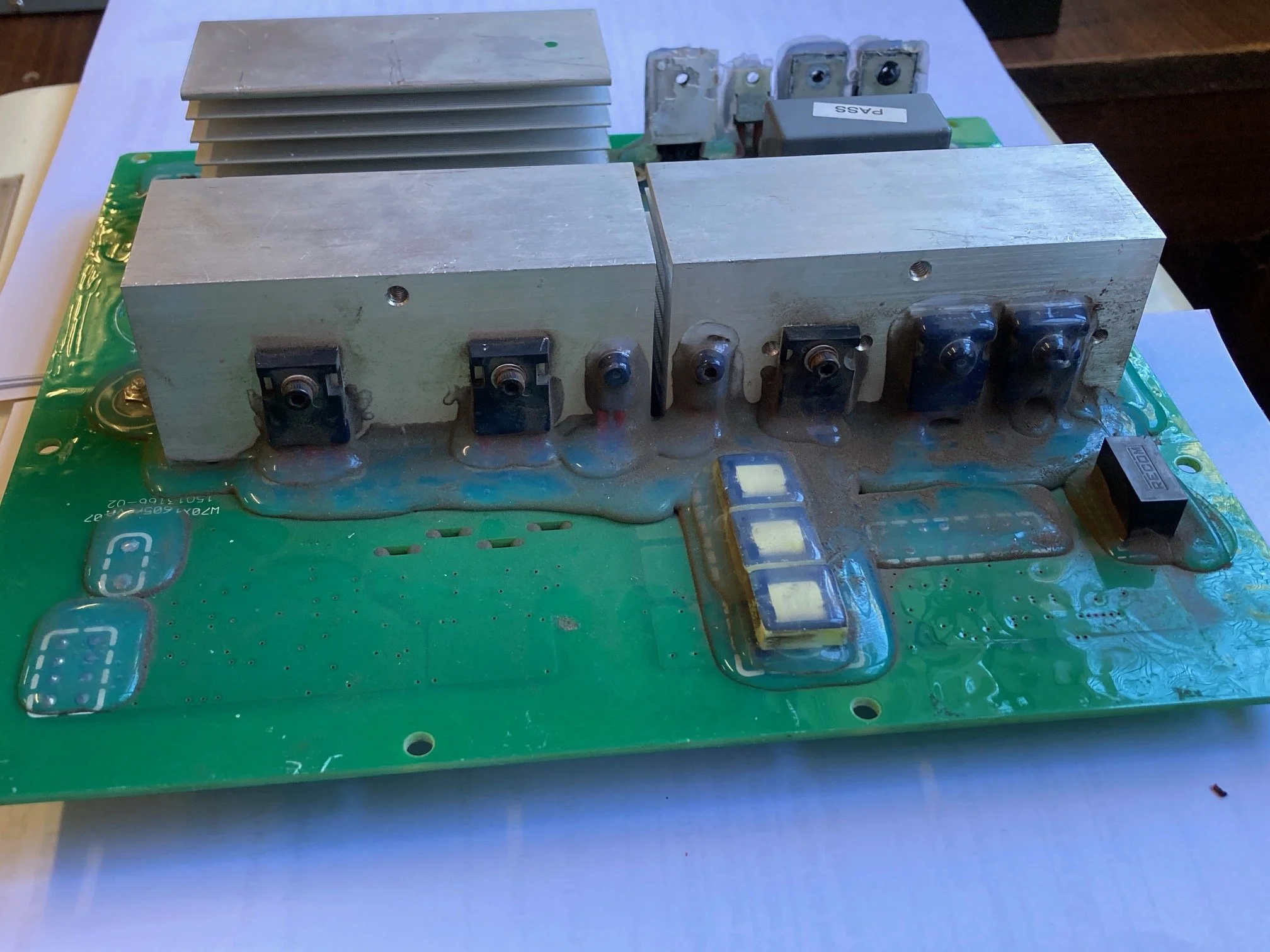
Ross VK7ALH gave a short presentation and talked us through a failure of a commercially manufactured power stage printed circuit board that had been tropicalised. Tropicalisation is the process that protects printed circuit boards from moisture, corrosion, fungus and contamination, ensuring reliable operation in hot, humid, or harsh environmental conditions.
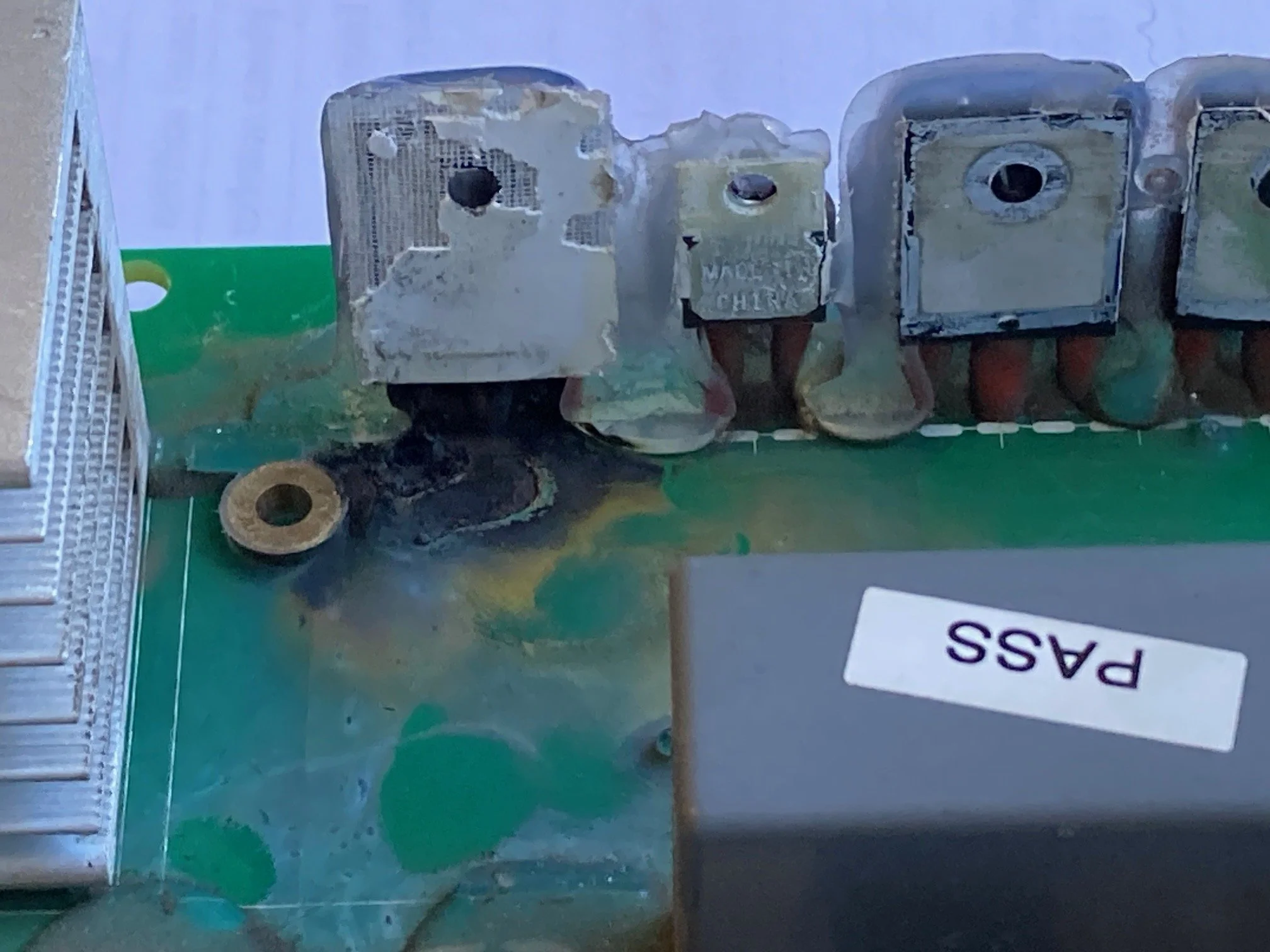
Imagine a substantial PCB about 300 mm in size. A bank of high power MOSFETS and a hefty finned aluminium heatsink. The MOSFETs are mounted vertically on the printed circuit board and bolted to the side of the heatsink. The heatsink is mounted on plate through 3 mm stand offs. All the board components including these devices were coated with that funny white Silicone / Acrylic conformal coating that protects them. So maybe the one MOSFET that had disgorged its inner contents into the atmosphere had suffered from a catastrophic overload, as its leads were still clearly covered with the protective coating?
On removal of the heatsink, which pulled off the board far too easily, it became quite obvious what the problem was. During manufacture they had not directed any sealant under the heatsink before it was mounted. All the MOSFET leads were completely unprotected from the rear and yes there was a reasonable build-up of particles and muck behind the exposed legs which had arced over and destroyed the device. An easy fix for Ross, should he desire, but an excellent example of a production line failing to fully implement a concept and a lack of quality control on an item destined for a harsh environment. Thanks Ross.
For Technical Night this week, we will be delving into the not so different world of programming MeshCore, the process is all most identical to all those units that we have programmed during last year, except they were Meshtastic. Same hardware but different software. Over the last year the MeshCore software or probably the human interface has come ahead leaps and bounds and is pretty decent to work with now. This has probably come about by the massive application interface rewrite by Liam Cottle ZL2DEV, from New Zealand. We will programme a few Clients mostly on Heltec V3 boards and demonstrate messaging and routing through routers to local Clients around Launceston.
If there is time after the MeshCore demonstration we will demonstrate the club’s trial repeater billing system concept. The idea was to apportion repeater airtime to the originator of each QSO.
DMR was certainly the easier platform as it only required “sniffing” of the registered users ID and amateur call-sign from the Ethernet data stream. This allows airtime to be logged and totalled for possible billing.
The 2 Metre RAA FM repeater proved far more challenging. The initial trial usage of Artificial Intelligence voice recognition to extract call-signs from the audio stream required way too much data bandwidth, was easily confused and was far to “clunky” in operation.
However due to the new light weight stand-alone version of Dragon “Speech to Text” software for Linux, and as its ability to happily run on a Raspberry Pi, this opened a new path for trialling. Dragon can be configured to capture call‑signs at the start of each carrier‑keyed transmission. Since the second call‑sign is the originator, this gives us enough information to “ball‑park” log airtime for billing, just as with DMR.
Trials show the concept works well for both DMR and FM, provided the signal‑to‑noise ratio is reasonable. Missed calls in noisy conditions should be minimal and will probably be ignored for billing purposes.
The real bonus came with the inclusion of the Goertzel Algorithm software, yes the one used for Morse code decoding, it has given us the added ability to use FFT or Fast Furrier Transform mathematics to analyse the CTCSS tone purity. Once the 123 Hz access tone is fully implemented on RAA repeater, the system will generate a unique “tone‑signature” for every transmission. Linked with Dragon’s call‑sign capture-to-text, this allows the matching of each individual radio signature to an operator call-sign. This provides another layer of validation for accurate invoicing. How cool is that!
This system should provide a healthy supplement to donations received for the VK7RAA upgrade fund.
See you at the next Technical Night this Wednesday…. which, if you’ve forgotten, falls on April 1st.
As usual pictures will be available on the NTARC Web site under “Blogs” for this broadcast. NTARC Blogs
UPCOMING EVENTS
On Air Test and Technical Net session - Every Wednesday night, Test-Net and CW course on 3.580 MHz from 7 pm, then a Technical Net on 3.567 MHz from 7.30 pm till 8.30 pm. Your host for the evening is Nic, VK7WW.
Club Room Technical night - The next session will be this Wednesday the 1st April and will commence at the usual time of 6.30 pm at the Club Room Archer Street, Rocherlea.
No Coffee Morning - next Friday 3rd April as it is Easter Good Friday public holiday.
Finally - If you have any items of news please email them to the Secretary at the following address news@ntarc.net all items to be received no later than 5 pm on the Friday prior to the Broadcast.
That’s all folks,
73, Stefan VK7ZSB.