Broadcast - 19 April 2026
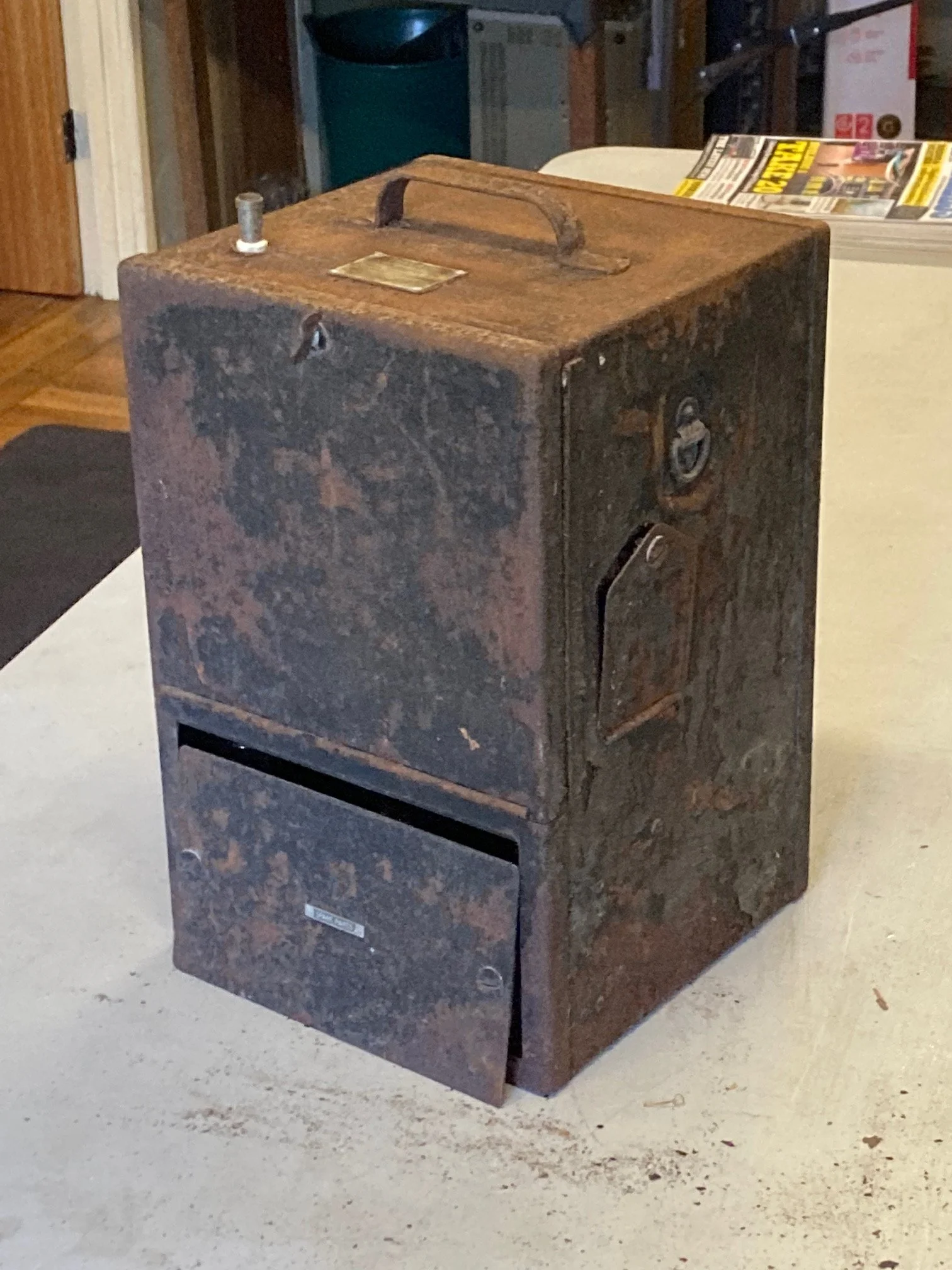
For a bit more of our Friday morning tea tech from last week, we also had a piece of obviously old test equipment dropped off, it was clearly military in origin.
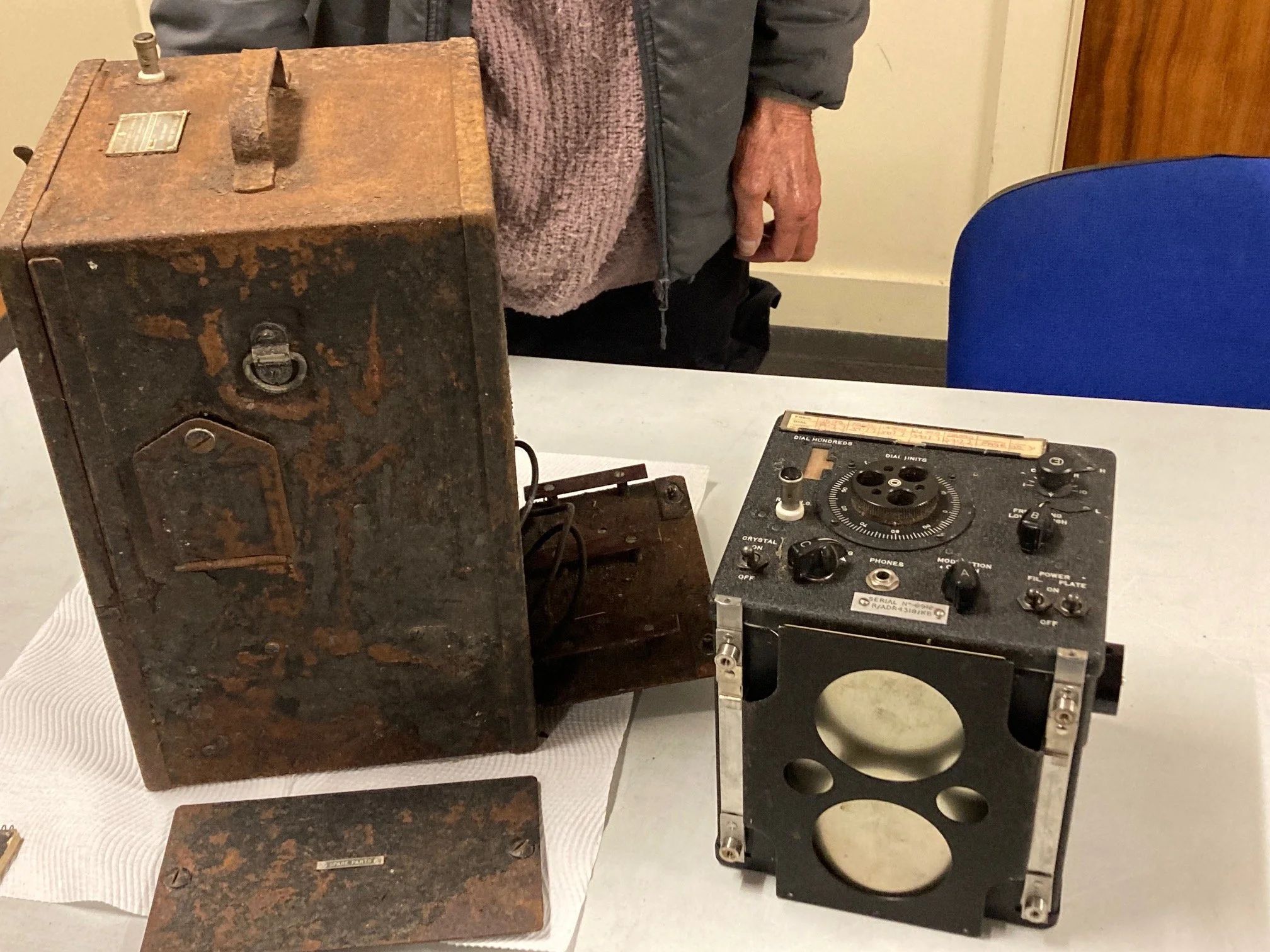
The outer carry case was a reddish-black colour, and from the moment it was placed on the bench it began shedding a fine dusting of reddish rust. That didn’t inspire confidence about what we might find inside. The case itself was roughly 300 mm wide and deep, and about 450 mm high.
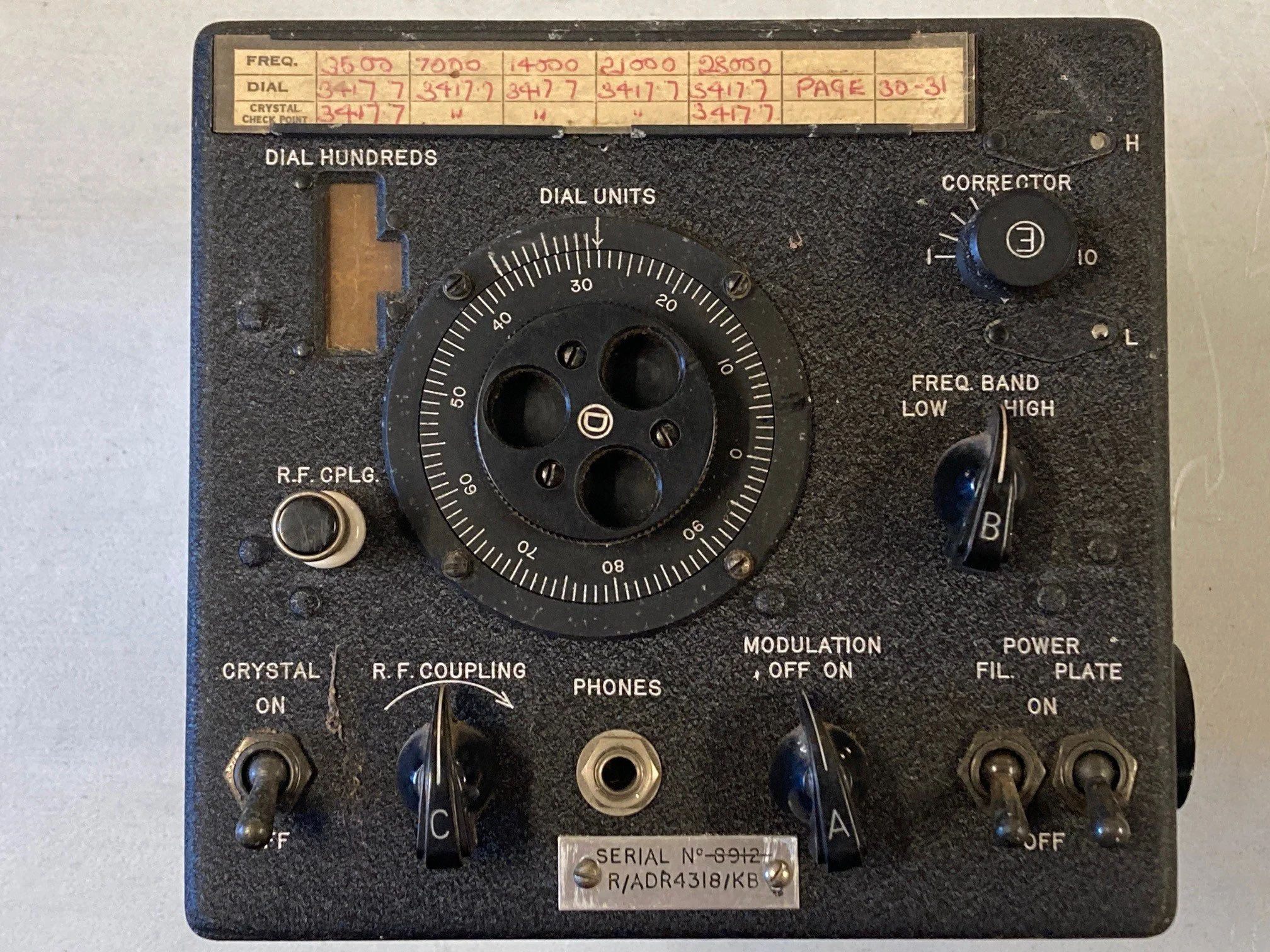
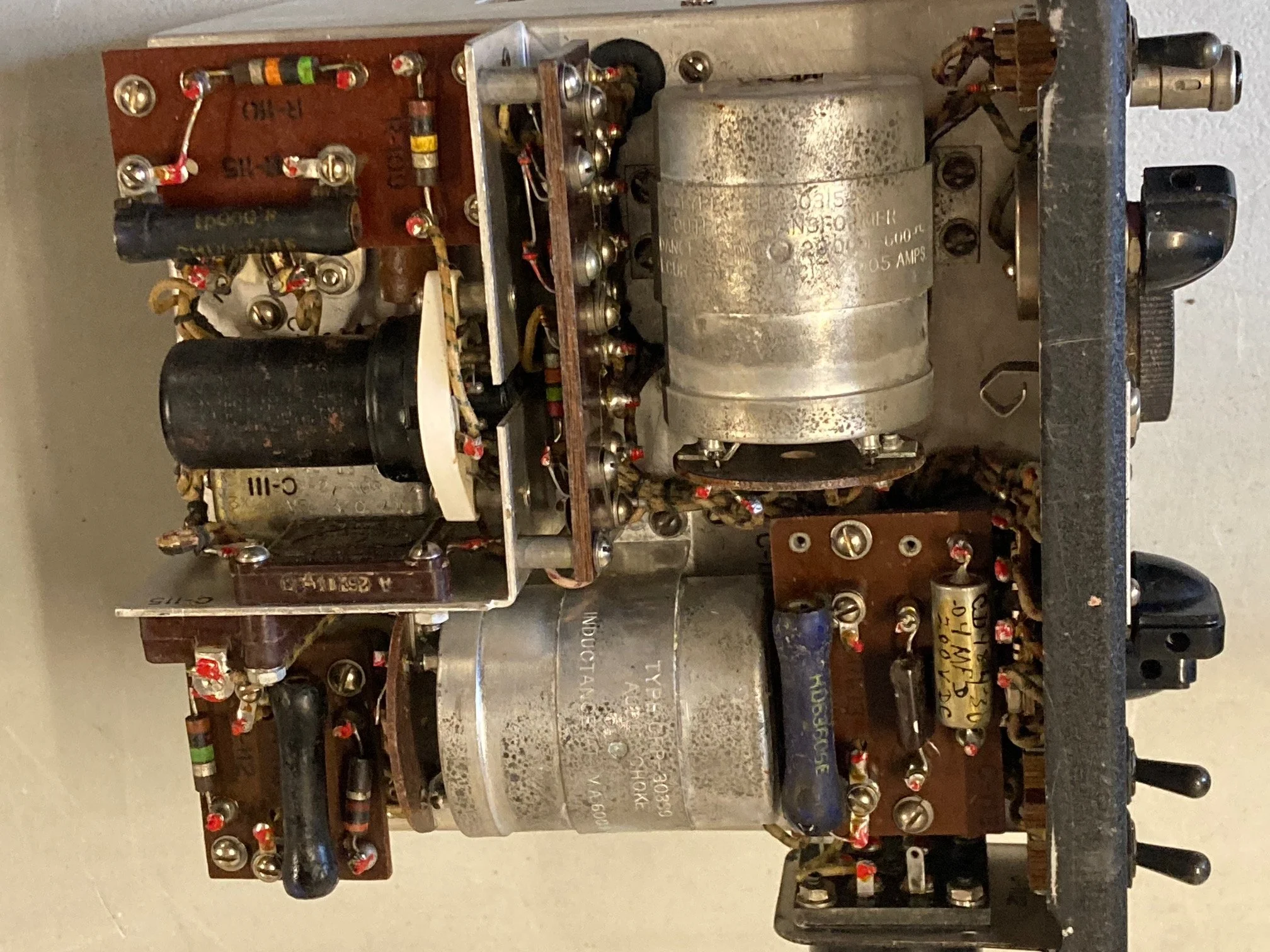
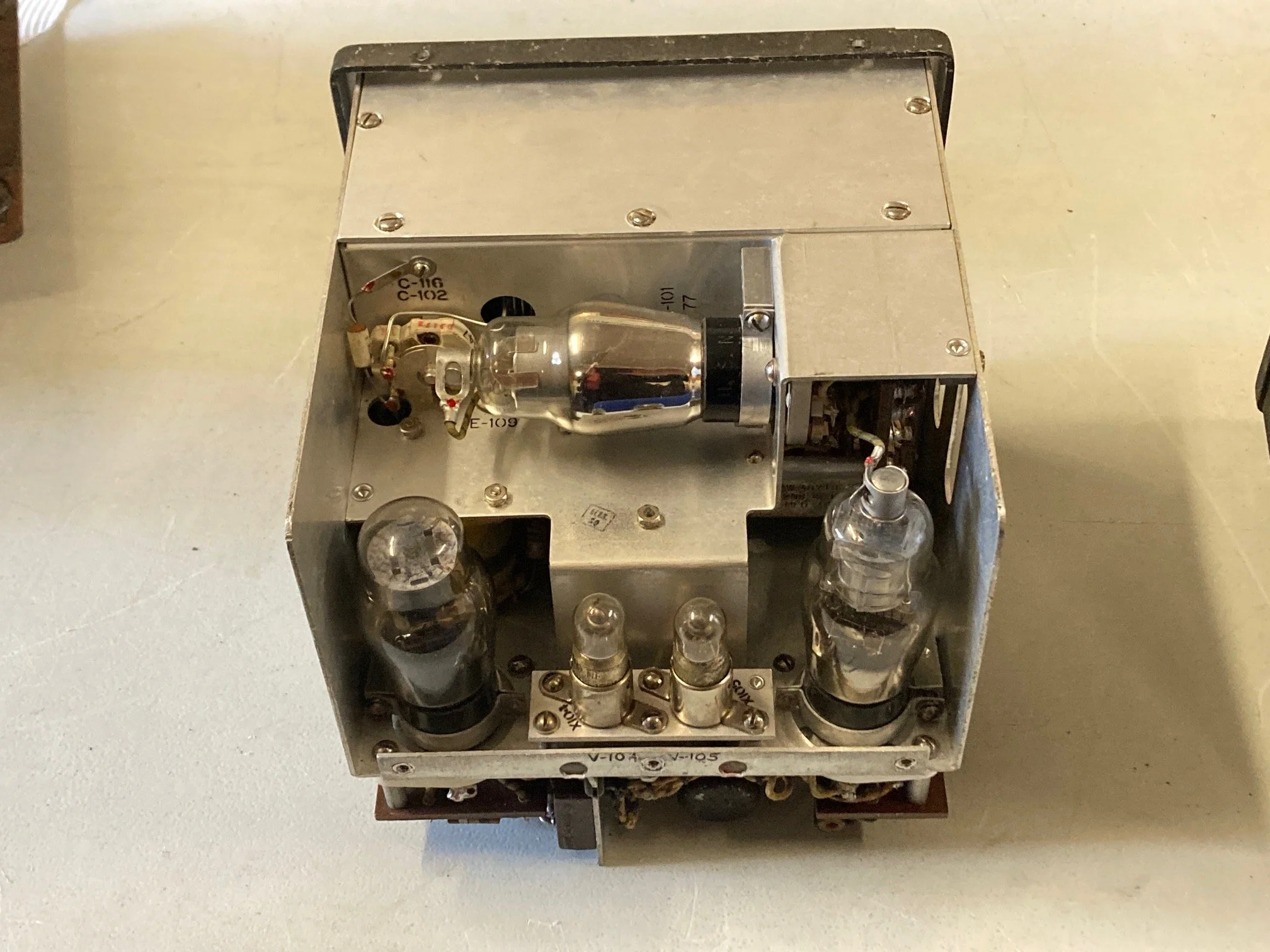
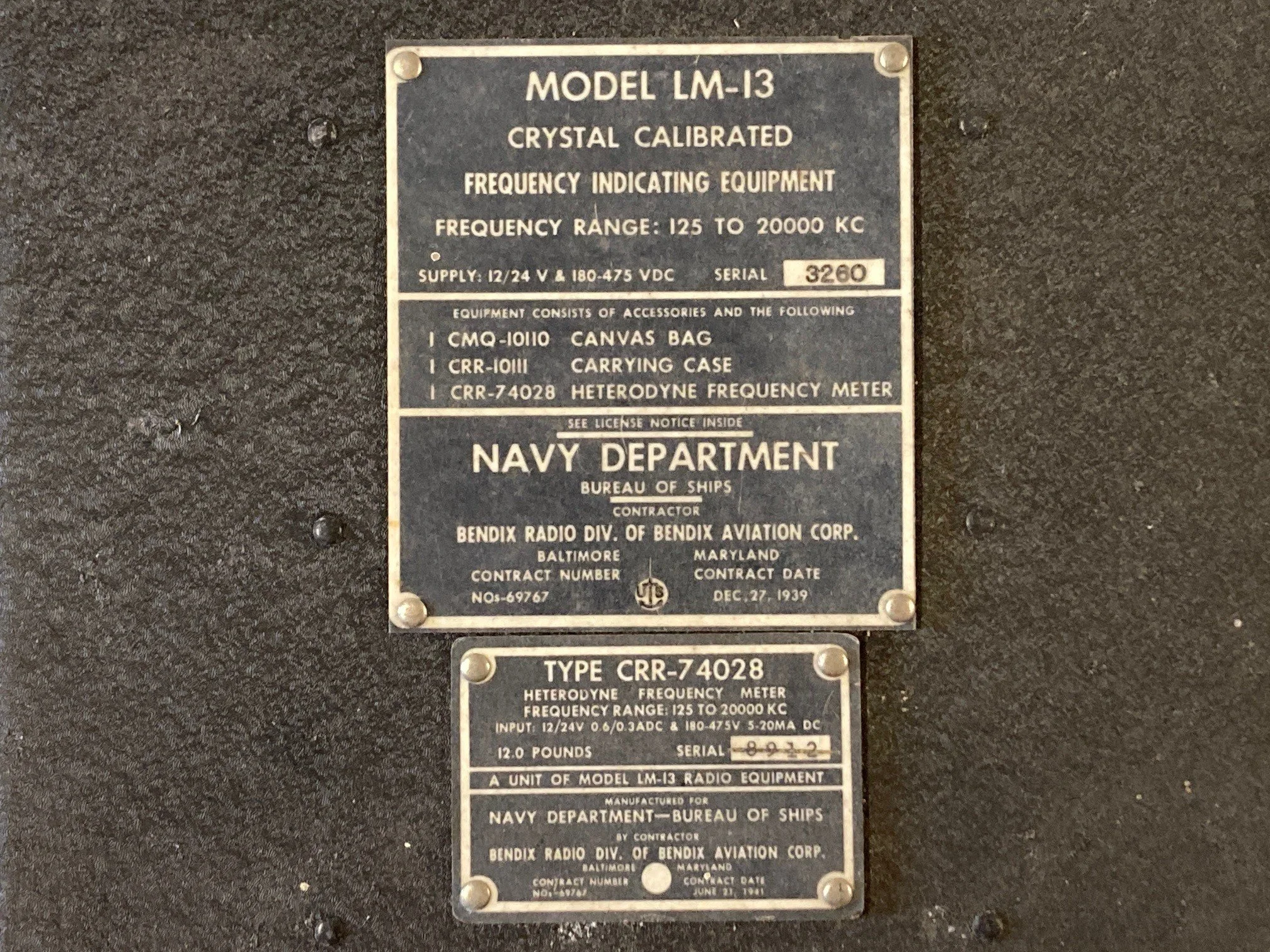
According to the information plate, it had been manufactured for the Navy Department - Bureau of Ships by the Bendix Radio Division of Bendix Aviation, Baltimore, in 1943. Opening the case revealed a Type CRR-74028 Heterodyne Frequency Meter, and to our surprise the instrument inside was in very good condition. The outer case, despite its decay, had clearly done its job. Even the internal chassis components and valves looked remarkably clean and certainly not what we were expecting, HiHi.
This unit turned out to be a WWII era Navy portable precision frequency standard which was crystal-calibrated and advanced for its time. It was used for aligning naval radio equipment and remains a fascinating and historically significant test instrument. Controls include a tuning dial with vernier corrector, band selector, crystal on/off switch, modulation switch, RF coupling control, and headphone jack.
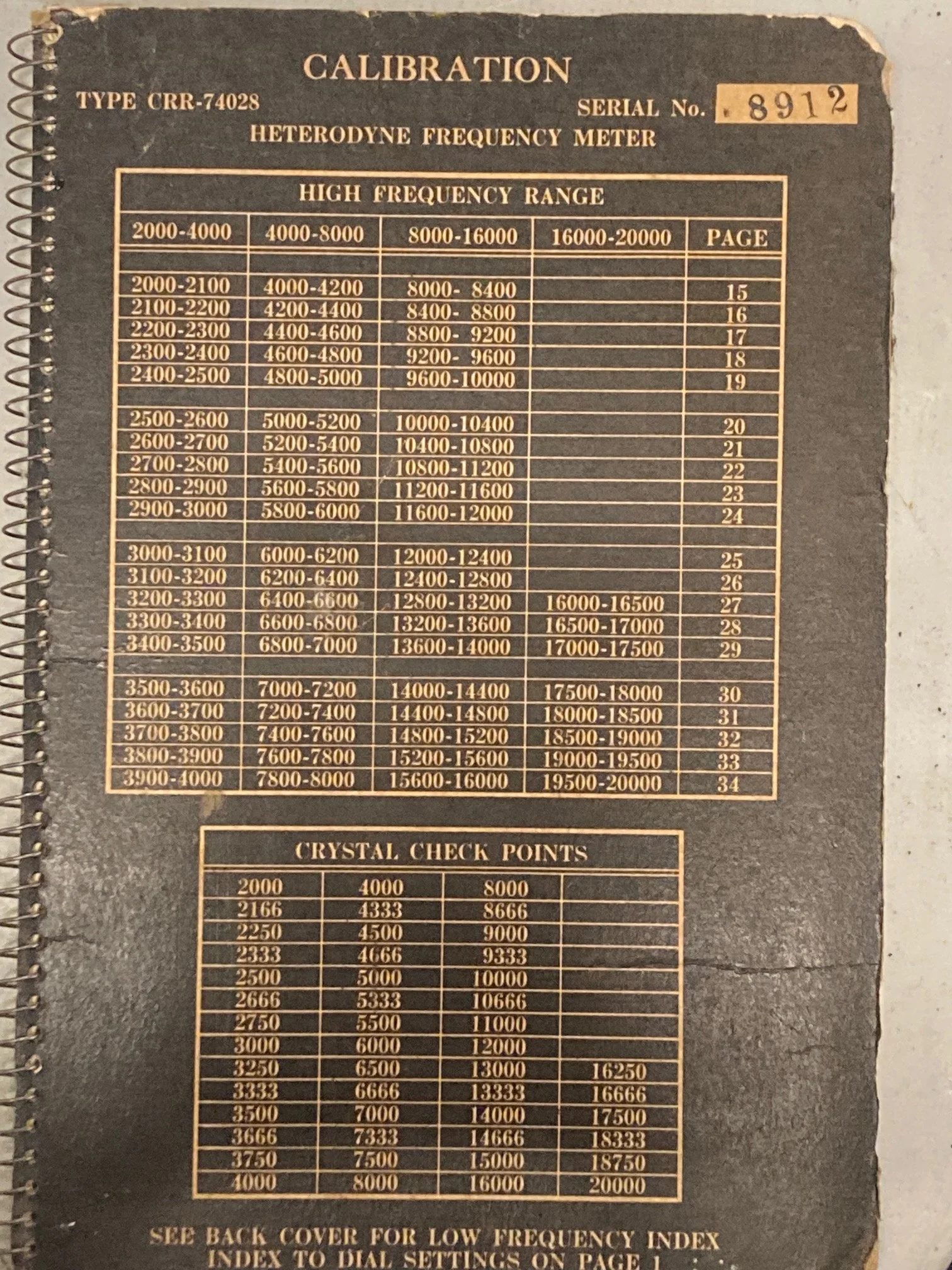
To set up a ship’s transmitter, the operator would power up the frequency meter and allow the 1 MHz crystal reference oscillator to warm up and stabilise. After calibrating the unit using the internal reference, the operator consulted the serial number matched calibration book to determine the correct dial setting for the desired frequency. The unit was then loosely coupled to the transmitter, often with a simple wire loop. With the transmitter placed in continuous carrier “tune” mode, the operator listened for the beat note between the transmitter carrier and the reference. Adjusting the transmitter’s master oscillator or VFO until the tone dropped to zero brought the transmitter exactly on frequency. The principle is the same as tuning a musical instrument to a reference pitch such as Concert A.
All we need now is someone motivated enough to restore the case to its original black crinkle finish, and the whole unit will look magnificent.
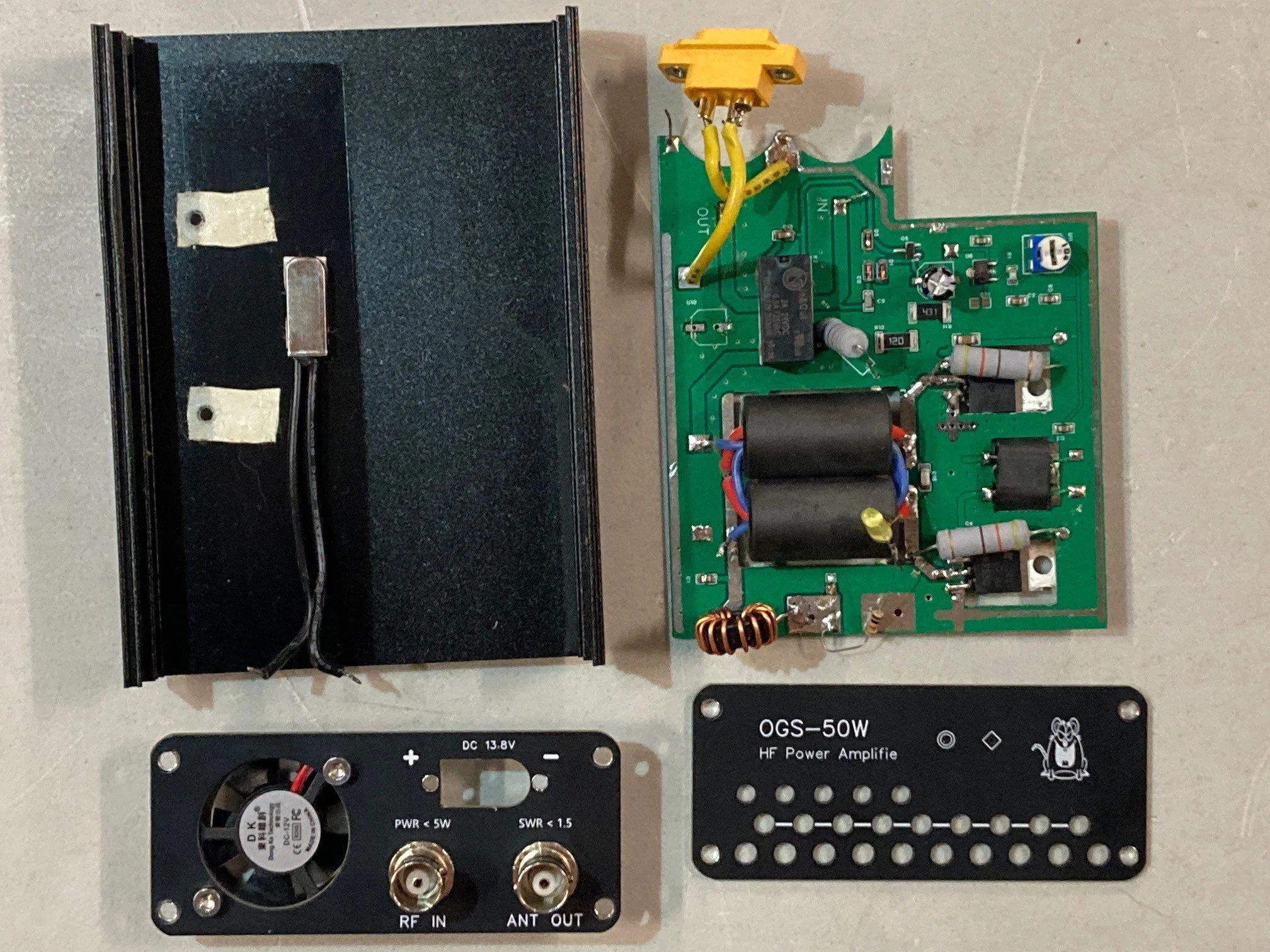
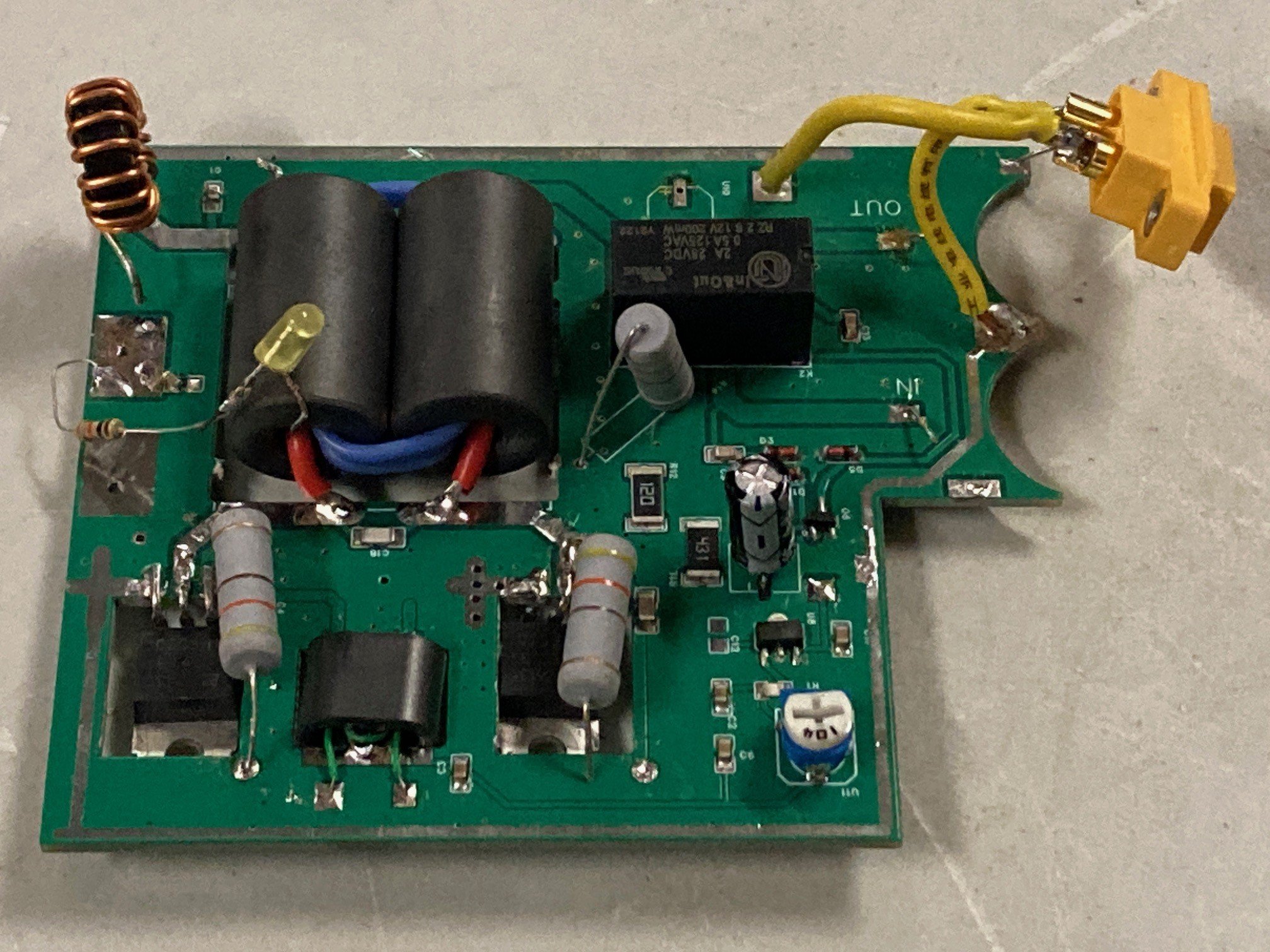
Ross VK7ALH brought in a very neat and compact 50 watt HF linear amplifier, the OGS-50, he had in for repair. The unit is built into a nice small aluminium extrusion with the now very common printed circuit front and rear panels. An interesting detail appeared on the inside of the front panel: a looping copper PCB track clearly intended to act as a small antenna, feeding a front panel LED, presumably to indicate transmit activity?
The amplifier didn’t have that all too familiar “let the smoke out of a semiconductor” smell. Instead, it had the other classic aroma: a vented and disgorged electrolytic capacitor. A closer look at the circuit revealed there was no internal reverse polarity protection, so it appears the main filter capacitor absorbed the full impact of an accidental reverse power connection.
It shouldn’t be a difficult repair, but the real question is what else further down the line may have been stressed. Fingers crossed for Ross.
As usual pictures will be available on the NTARC Web site under “Blogs” for this broadcast. NTARC Blogs
UPCOMING EVENTS
On Air Test and Technical Net session - Every Wednesday night, Test-Net and CW course on 3.580 MHz from 7 pm, then a Technical Net on 3.567 MHz from 7.30 pm till 8.30 pm. Your host for the evening is Nic, VK7WW.
Club General Meeting - Has been moved to Wednesday 22nd April at 7:30pm. Held at the NTARC Club Room, Rocherlea Scout Hall, Archer Street, Rocherlea. If you have items you would like added to the agenda please email the secretary at: secretary@ntarc.net .
Club Room Technical night - The next session will be Wednesday the 29th April and will commence at the usual time of 6.30 pm at the Club Room Archer Street, Rocherlea.
Coffee Morning - Held every Friday in the NTARC Club rooms. Time is from 10 am to noon.
Finally - If you have any items of news please email them to the Secretary at the following address news@ntarc.net all items to be received no later than 5 pm on the Friday prior to the Broadcast.
That’s all folks,
73, Stefan VK7ZSB.