Broadcast - 12 July 2026
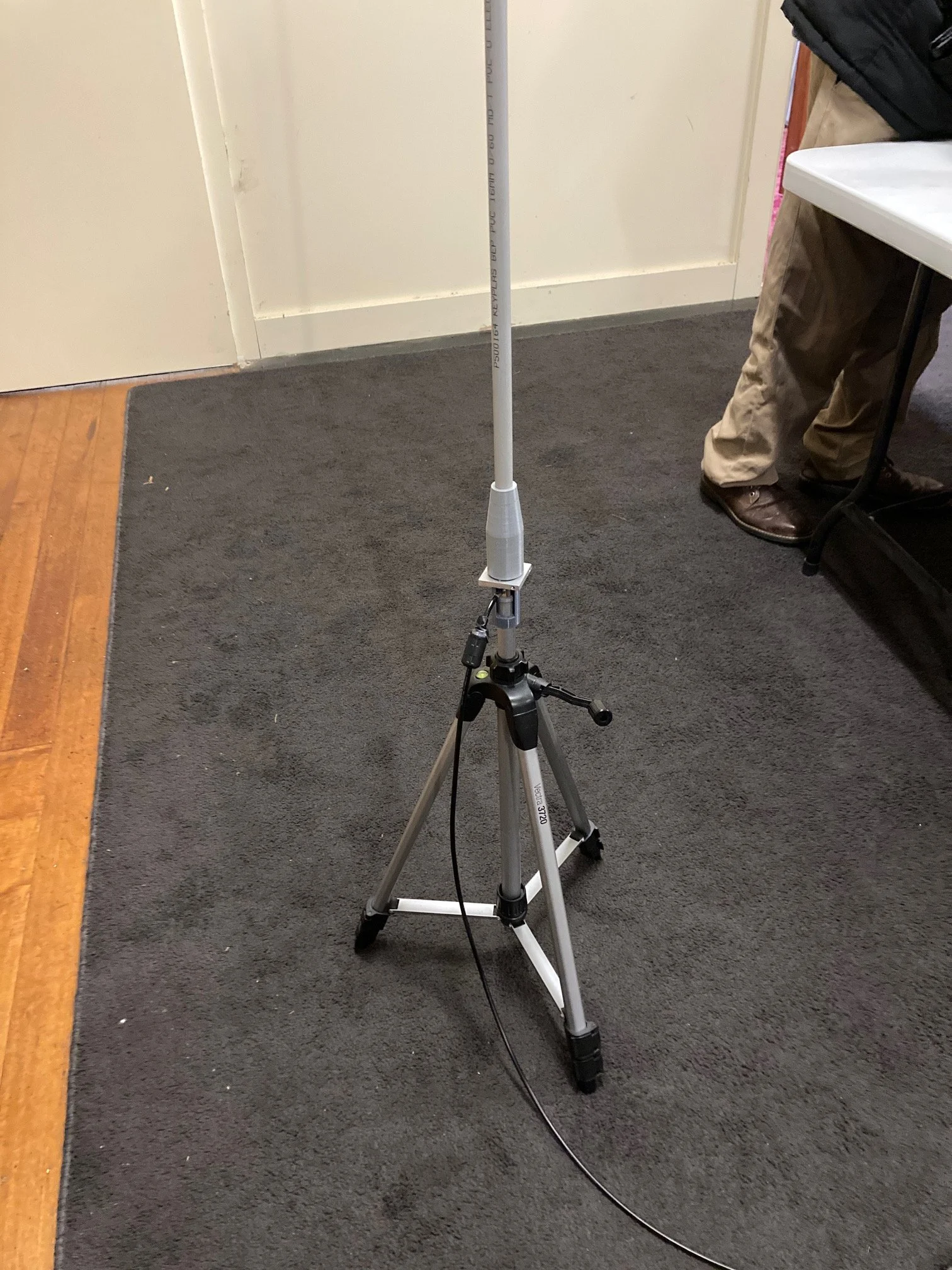
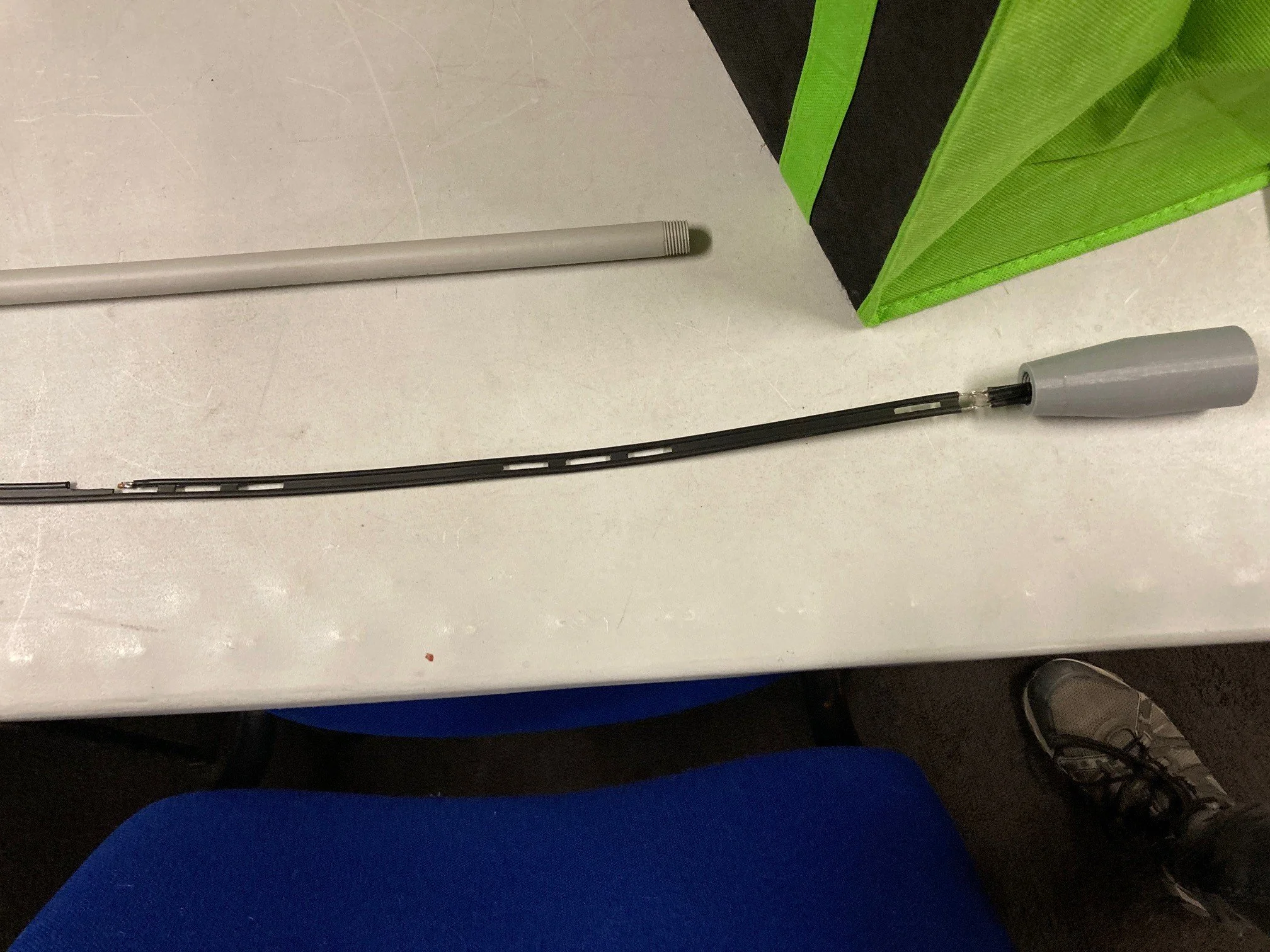
Last technical night, Colin VK7ZCF had his latest creation, a dual band 2 metre / 70 cm “J Pole” type antenna. Not having been overly happy with the results he had obtained from the previous build, he was experimenting with a similar concept unit, this time by Ed Fong WN6IQN. It is described as a “Roll Up” portable antenna and known as the DBJ-2. It is substantially made from 300 Ohm ribbon cable! In this build the ribbon section is held within a 20mm conduit and mounted on a conical base that he had 3D printed.
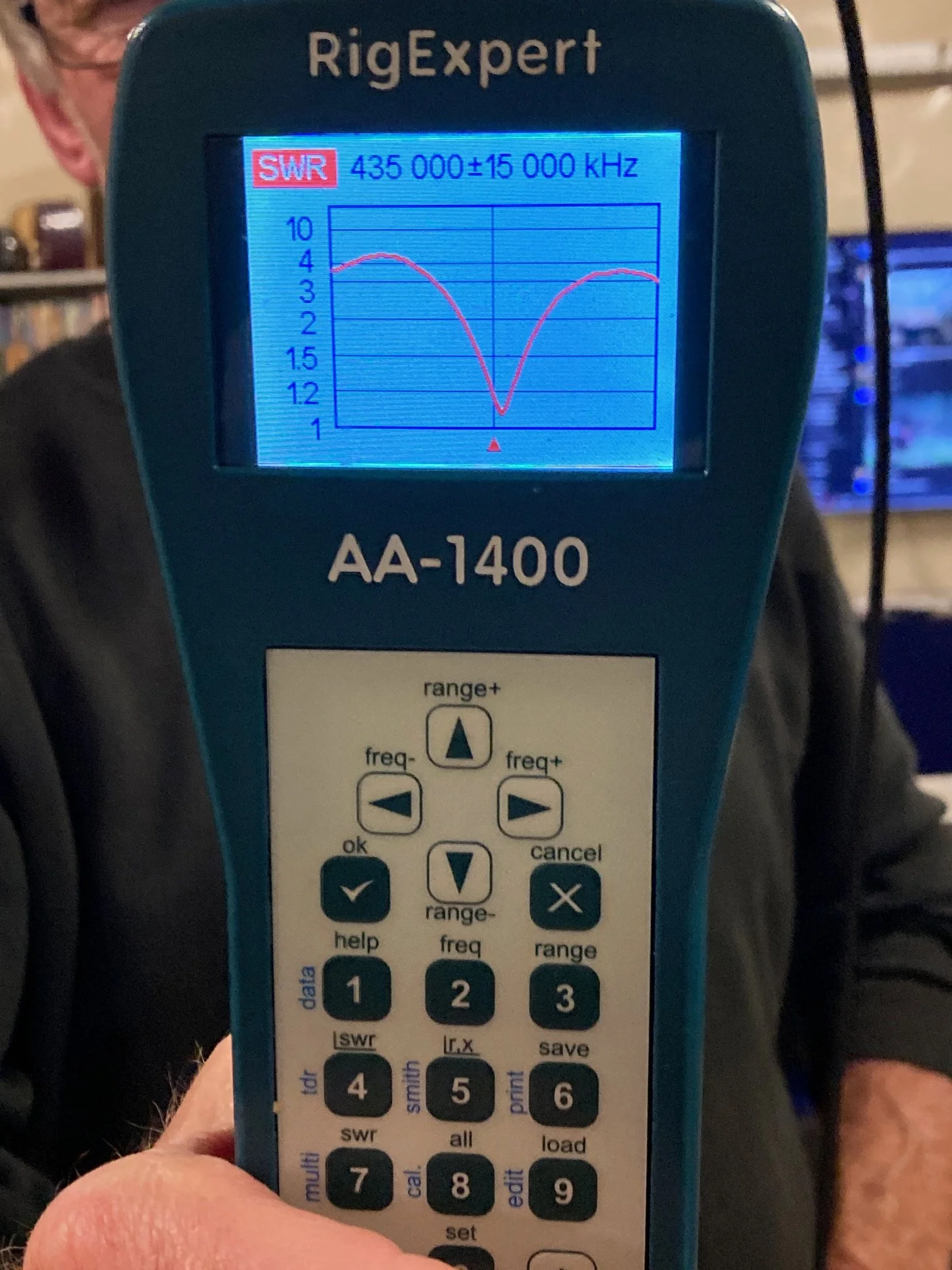
Looking at the RigExpert display, he should be happy with the 1.1 to 1 SWR results.
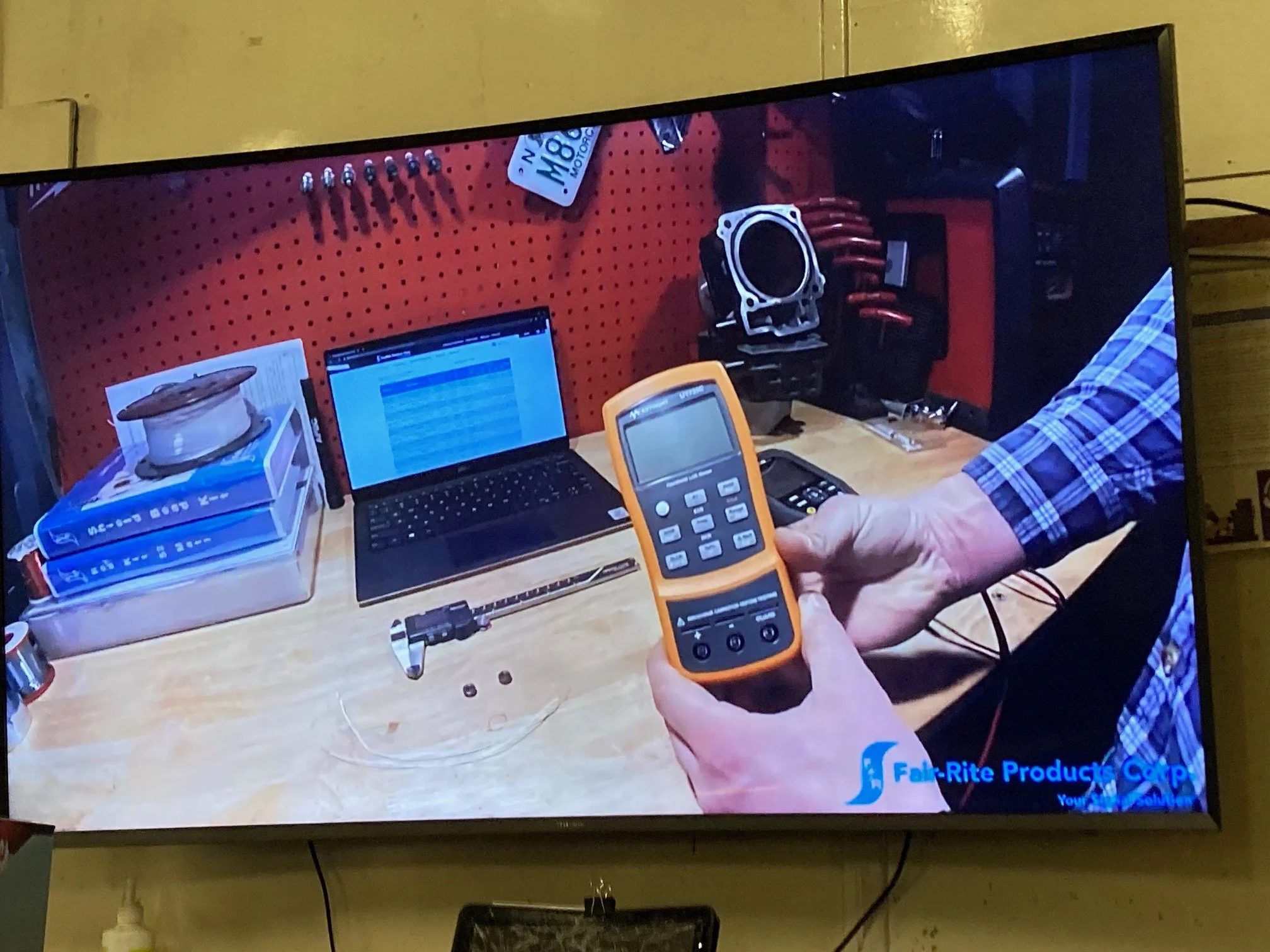
We then moved on to a short fifteen minute video that Colin had found on-line, which was about ferrite cores and how to identify them. This wasn’t presented as laboratory grade test and measurement work; rather, it was a practical demonstration aimed at everyday amateurs.
The video was produced by Mike Harrison, product manager at Fair-Rite Products Group..... and yes, Fair-Rite is a clever name for a company that manufactures ferrite components.
Mike walked through how you can evaluate ferrite cores using simple, cost-effective tools, an LCR meter, a common multimeter, and a Vernier calliper. His focus was on determining both the type and suitability of ferrite materials.
He highlighted the two main families of ferrites: Nickel-zinc ferrites - lower permeability, suited to higher operating frequencies. Manganese-zinc ferrites - higher permeability, suited to lower operating frequencies.
The video covered practical measurements such as physical dimensions, bulk resistivity, and inductance using a known winding. To minimise measurement error, he used ten turns through the aperture of each core, reducing the influence of wire-added inductance compared with a single turn winding.
The aim of the presentation was to give viewers confidence in evaluating their own ferrite cores and making an educated guess about the material type they’re dealing with. It was a simple, accessible demonstration that offered useful insight for anyone experimenting with ferrites in RF applications.
Later Ian VK7IG, following the line of thinking on ferrite cores and inductors with an interesting article from Jeff Steinkamp N7YG. Jeff explores a slightly different angle, but with the same focus on keeping test equipment practical and cost-effective.
His article looks at using a Vector Network Analyser for two-port measurements, along with simple home built component test jigs to make reliable input connections. A VNA operates by sending a very low-power test signal through a circuit or component, then measuring both the amplitude and phase of the reflected and transmitted signals.
This approach allows inductors to be measured with far greater precision and crucially, at the actual operating frequencies amateurs tend to use, which are typically much higher than the 100 kHz test frequency found in most everyday LCR meters.
It was a great find from Ian, and a very accessible introduction for anyone curious about applying VNA techniques to component evaluation.
Links are included in the text version of this broadcast:
How to Identify an Unknown Ferrite Core: https://www.youtube.com/watch?v=Q95Vwk3kZok
VNA component measurement: PDF on NTARC website for this broadcast VNA testing
DBJ2 rollable antenna: https://edsantennas.weebly.com/uploads/2/9/3/5/29358461/dbj-2_qst.pdf
As usual pictures will be available on the NTARC Web site under “Blogs” for this broadcast. NTARC Blogs
UPCOMING EVENTS
CW course - Every Wednesday night, on 3.580 MHz from 7 to 7.30 pm. Your CW Coach for the evening is Nic, VK7WW.
On Air Test and Technical gathering - Wednesday nights, on 3.567 MHz from 7.30 pm.
Club Room Technical night - The next session will be Wednesday the 22nd July and will commence at the usual time of 6.30 pm at the Club Room Archer Street, Rocherlea.
Coffee Morning - Held every Friday in the NTARC Club rooms. Time is from 10 am to noon.
Finally - If you have any items of news please email them to the Secretary at the following address news@ntarc.net all items to be received no later than 5 pm on the Friday prior to the Broadcast.
That’s all folks,
73, Stefan VK7ZSB.