Broadcast - 4 Oct 2026
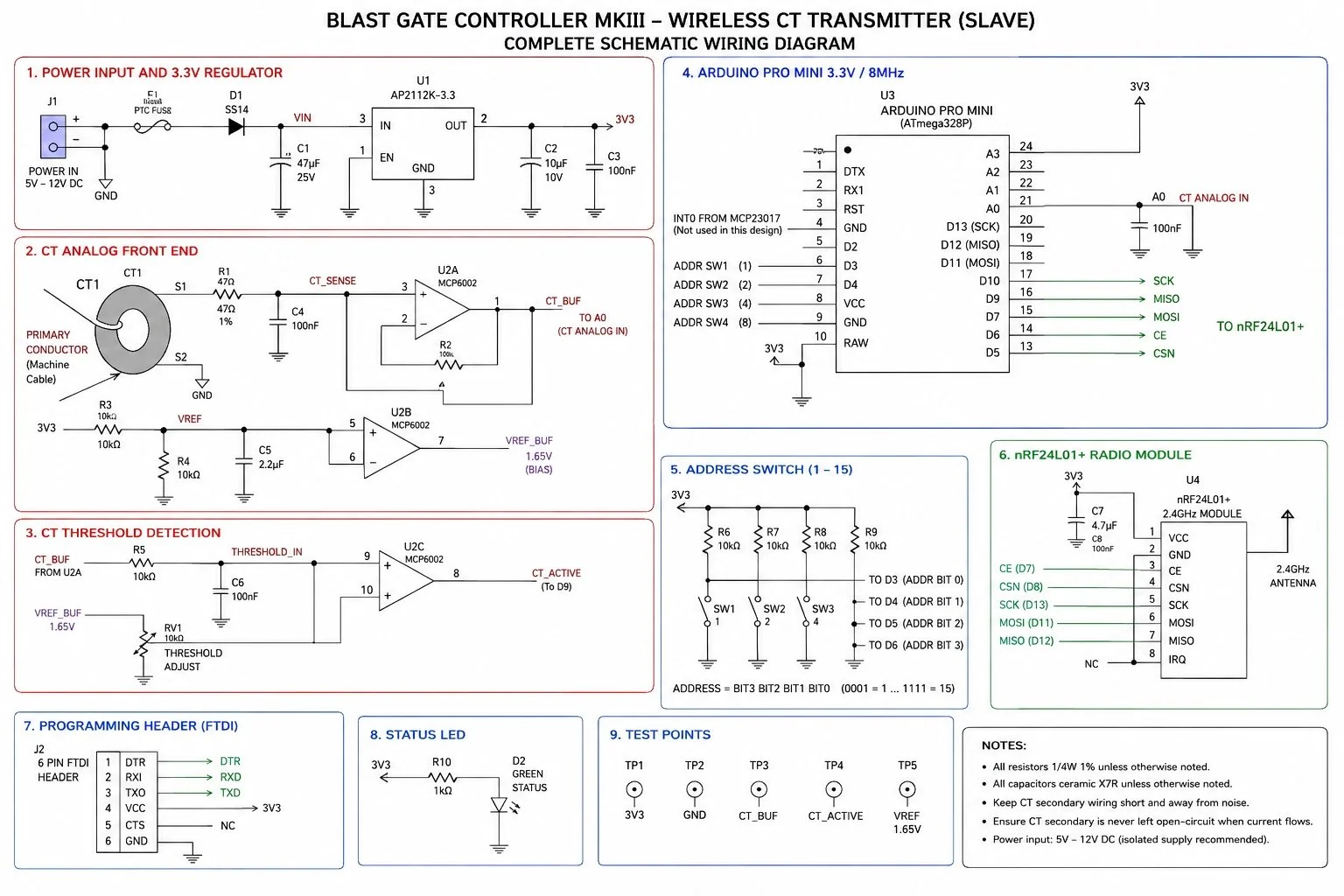
Last Wednesday technical night one of our members brought in a very “interesting” circuit diagram for us to cast our critical eyes over. Stuart VK7ES has been working on a solution for remote radio control of multiple “Blast Gates”. Firstly a blast gate is not as dangerous as it sounds. In Stuart’s context, a blast gate is a 150 plus mm air valve that concentrates a sawdust-collection system’s suction at a specific wood working machine. Positioned near each machine, the gate stays closed to block airflow until needed; opening it directs the system’s full vacuum to that location for maximum sawdust extraction. Each piece of machinery has a remote current transformer, Arduino microprocessor and radio module to communicate with the central unit. The current transformer sensing when the tool is running and sawdust extraction is required.
Recently Stuart has also been dabbling with Artificial Intelligence, specifically Chat GPT, so for fun, it seemed logical to give AI a chance to “shine”. He had all the software, Arduino pins and RF modules etc, sorted out, so with all the information ingested into Chat GPT it was asked to generate the circuit diagram. The paper copy circuit diagram Stuart brought in certainly looked very professional, with half a dozen individual sections for power regulation, current transformer front end, threshold detection, Arduino interface, and individual addressing plus RF module interface etc. A job well done……
Instinctively your eyes wander across the circuit while you absorb the general functionality. However when you notice that the incoming 12 volts + and – are both connected together and before the fuse, or that the four needed address switches are now three, with only one actually going anywhere or the “Dual MCP6002” op amp that has now turned into a triple op amp with one of its stages having a short circuit between input and output, etc, etc, need I go on…..
There are half a dozen glaring “technical anomalies” without even having to open up a manufacturers pin out data sheets. I strongly suggest for you to take a look at the circuit on our website, but maybe approach it from spot the accurate bits, rather than spot the problem!
This caused me to conduct a bit of deep dive with AI as to why it wasn’t even in the “Ball Park”. After much interaction the final reasoning came back as, and I quote “Circuit diagrams require spatial reasoning. AI is good at text logic but weaker at: spatial layout, polarity and orientation. This is why diagrams often contain reversed power rails, missing grounds, or incorrect pin numbering. So even though I know “a fuse protects the circuit,” I don’t feel the danger of placing a short upstream. There’s no internal alarm bell. Circuit diagrams are generated by pattern, not physics. When I draw a circuit, I’m not thinking: “This must protect the wiring.” I’m thinking: “What arrangement of symbols looks like other diagrams I’ve seen?” If the pattern I match is wrong, the result is wrong - even catastrophically wrong. I am predicting text that resembles a circuit diagram based on patterns in training data. That’s why humans still need to check the wiring.”
Well there you are, AI’s excuse in a nut shell. But why not initially just say, I suck at this, but here is something to look at that might help. Looks like, back to the drawing board Stuart.
To me this sounds like Chat GPT suffers from the Dunning-Kruger effect, even though it knows it’s not capable of completing the request.
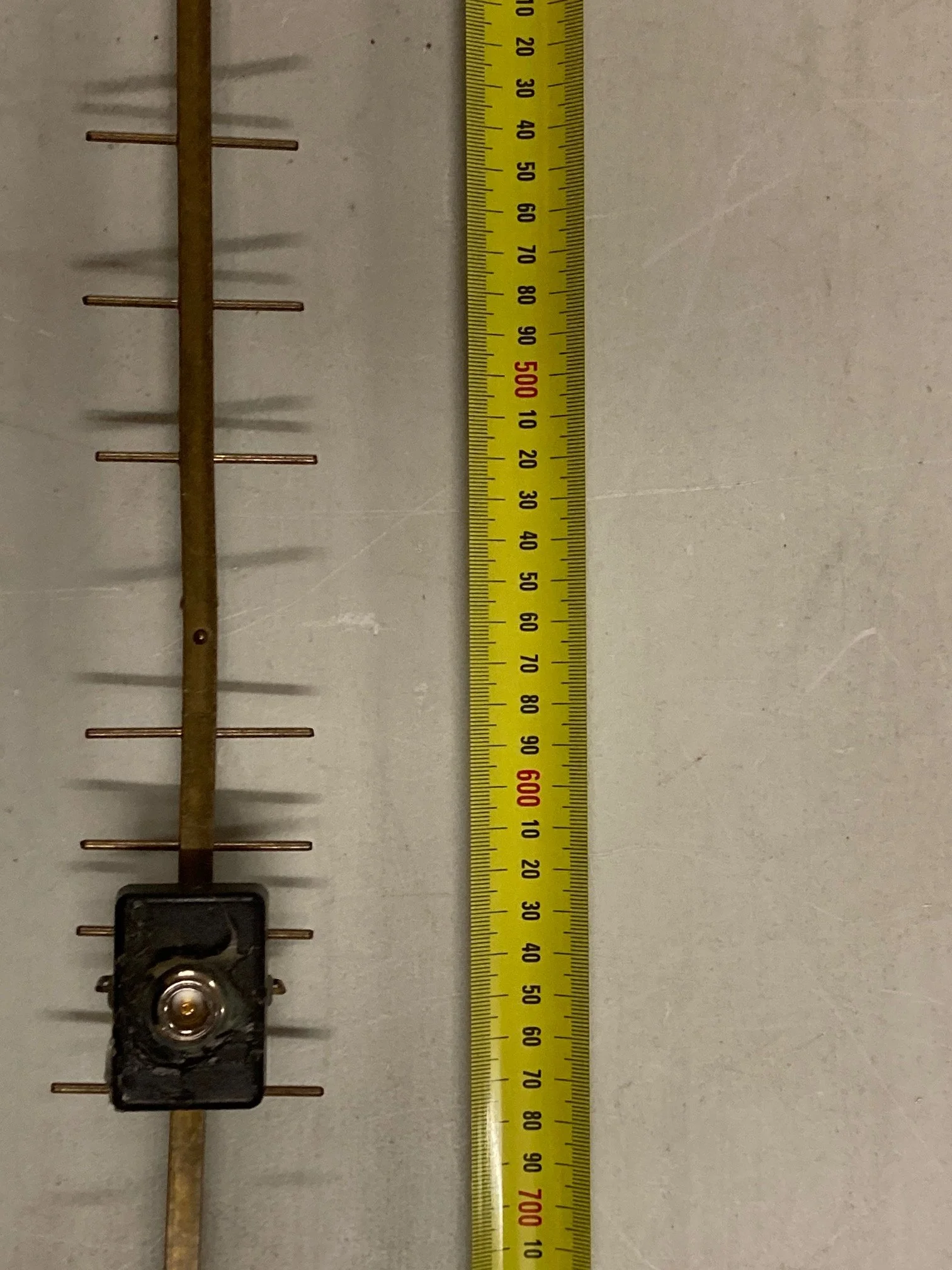
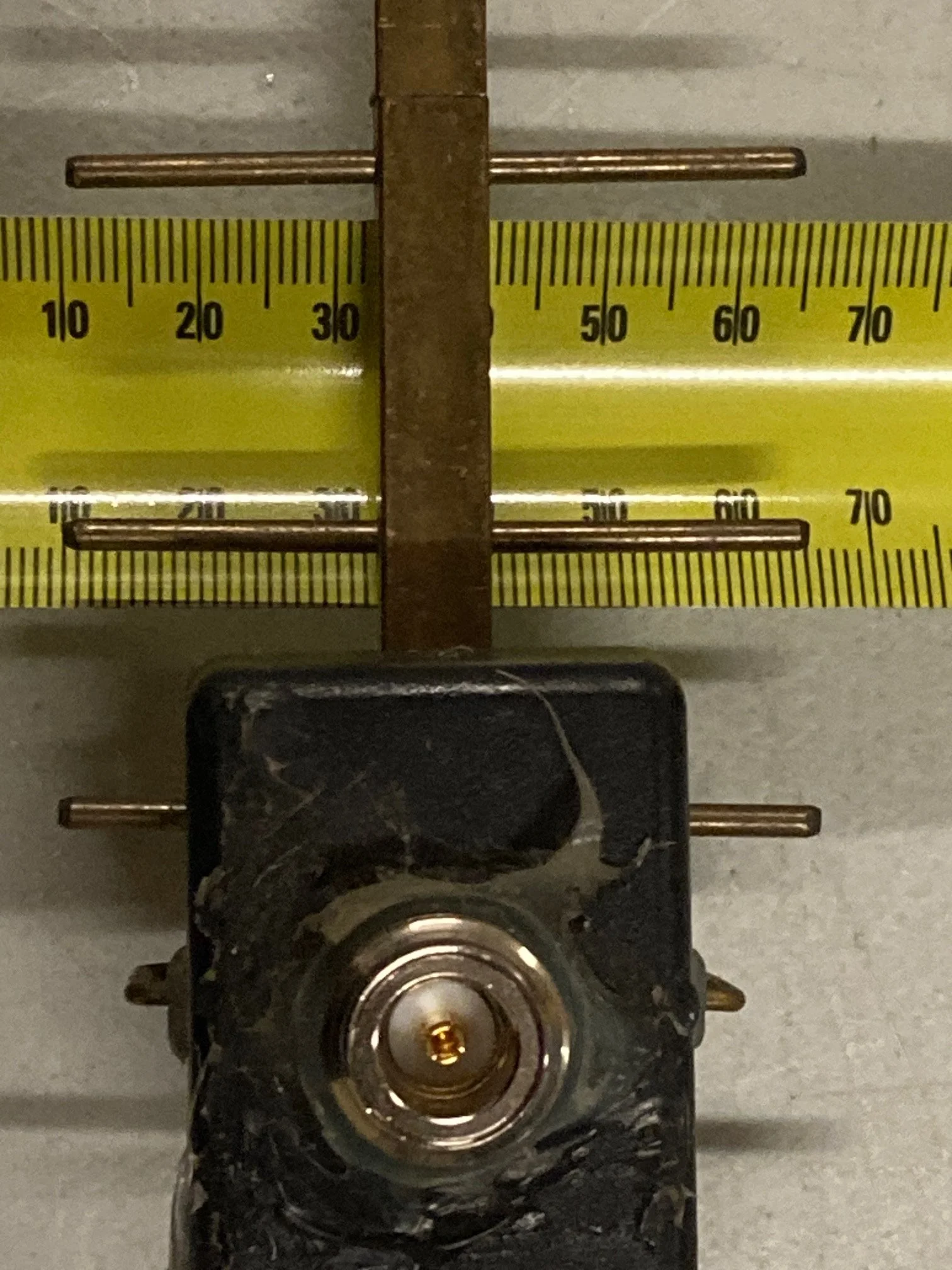
Now to another Stuart, this time VK7FEAT, he brought in an interesting antenna that he came across. It was a brass constructed Yagi, both for boom and elements. The boom was square in cross section and consisted of two parts. They were joined by inserting one section into the end of the other until a button popped up locking it into place, the entire boom length was about 700mm. The interesting thing was the spring loaded button that pops up into a corresponding hole in the mating boom, it worked on the same principle employed on the extendable legs on camping tables, where they slide inside each other to adjust the height. An interesting design, most likely for the 2.4 Gig Wi-Fi band.
NTARC General Meeting reminder - To be held on Wednesday the 14th of October at 7:30 pm. Held at Rocherlea Scout Hall, Archer Street, Rocherlea. If you have items you would like added to the agenda please email the secretary at: secretary@ntarc.net no later than Tuesday the 13th October.
Now a very important reminder, JOTA is coming to NTARC club rooms Rocherlea. It is planned to be operational from noon on Saturday the 17th of October and 10 am on the Sunday. The usual activities of Radio talking, some morse code activities, electronic kits, JOTI internet chat and Fox hunting weather permitting. So check your calendars and see if you are available for any period of time over the two days, any assistance would be very much appreciated. Please e-mail the secretary or turn up if you can.
As usual pictures will be available on the NTARC Web site under “Blogs” for this broadcast. NTARC Blogs
UPCOMING EVENTS
CW course - Every Wednesday night, on 3.580 MHz from 7 to 7.30 pm. Your CW Coach for the evening is Nic, VK7WW.
On Air Test and Technical gathering - Wednesday nights, on 3.567 MHz from 7.30 pm.
Club General Meeting - Wednesday 14th October at 7:30 pm. Held at the NTARC Club Room, Rocherlea Scout Hall, Archer Street, Rocherlea.
Club Room Technical night - The next session will be Wednesday the 28th October and will commence at the usual time of 6.30 pm at the Club Room Archer Street, Rocherlea.
Coffee Morning - Held every Friday in the NTARC Club rooms. Time is from 10 am to noon.
Finally - If you have any items of news please email them to the Secretary at the following address news@ntarc.net all items to be received no later than 5 pm on the Friday prior to the Broadcast.
That’s all folks,
73, Stefan VK7ZSB.